Saturday, August 14, 2010

Two to watch


The excellent indiemoviesonline posts a huge variety of movies that you can watch for free, in full, and completely legally on their website. Unlike most free movie sites we're not just talking about old out of copyright films, and they've just posted two really interesting recent movies.

There's Home (reviewed here) with Isabelle Huppert as a mother whose unwillingness to move house, even when a motorway is built right next to the home she shares with her family, becomes ever more extreme. Huppert is, as ever, spectacular and the film is unusual and compelling.

I haven't seen the other film myself, but thanks to the presence of Deborah Francois (of The Page Turner, among others) Unmade Beds has been on my radar for some time. It's got a young international cast, all of whom apparently end up living in an artist's squat in London.

I'll be chaecking out Unmade Beds, I suggest you have a look at both these films, as well as the rest of the indiemoviesonline selection.

Thursday, August 12, 2010

Mini-Reviews: Selected recent viewing

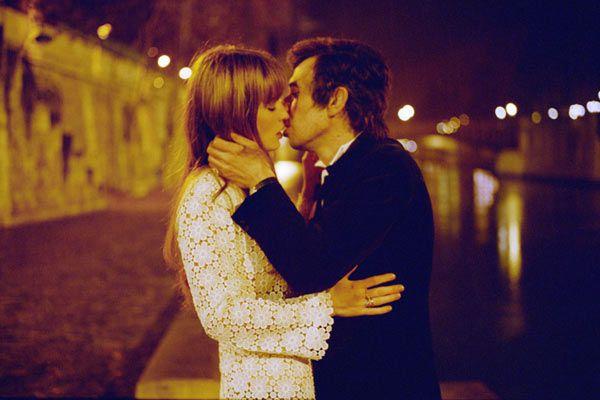
GAINSBOURG
DIR: Joann Sfar


Comic book artist Sfar makes an arresting directorial debut with this biopic of a man perhaps best described (by a friend of a friend) as ‘France’s pervert laureate’. Sfar covers most of Gainsbourg’s life, from his childhood (when he was still Lucien Ginsburg) in Nazi occupied Paris, to his controversial career as a musician and his prolific womanising with some of the world’s greatest beauties; Juliette Greco, Brigitte Bardot and Jane Birkin among them. It’s a scattershot film, inevitable really when you are covering roughly 50 years, but it’s also an unusual and entertaining work.

Sfar follows the basic biopic form, most notably in the scene when Gainsbourg writes Je t’aime (moi non plus), which has the same slightly clunking feel as the moment in Ray when Jamie Foxx, as Ray Charles, writes Hit the road, Jack, but in both style and storytelling this is a rather unusual film. Sfar employs a clever device of giving Gainsbourg’s rebellious streak physical form (as a caricature known as Gainsbarre, which is, apparently, a very good pun in French). Doug Jones, surely the cinema’s foremost pantomime artist at the moment, gives Gainsbarre shape, and makes him by turns a funny, mischievous and sinister presence in the film. It’s a contrivance, and one that could have been heavy handed, but it is beautifully handled and the touch of surrealism it lends the film feels strangely appropriate to the unpredictable man at its centre.

The performances are top notch all round, but special notice has to go to Eric Elmosnino, he may look more like a cadaverous cross between Gainsbourg and Rowan Atkinson, but he embodies Gainsbourg completely, to the point that it seems less performance than possession. It’s not an easy part, Gainsbourg grows progressively more loathsome as the film goes on, but Elmosnino makes him entertaining, if not likable. There is also a tinge of sadness to watching the film, because the other stand out performance is given by British actress Lucy Gordon, who makes for an eerily convincing Jane Birkin. Gordon killed herself just weeks after finishing this role; a tragedy made even more senseless when you see how she leaps off the screen here.

I knew nothing about Serge Gainsbourg going into this film, and though I’m not sure I know much more now, I certainly had fun for two hours.


FAINTHEART
DIR: Vito Rocco


Charming, but ultimately far too safe and familiar to leave any lasting impression, this British rom-com about a battle re-enactor (played by the excellent Eddie Marsan) trying to win back his wife (Jessica Hynes) feels like exactly what it is; a film made by committee. The script, director and several cast members, were chosen through votes on Myspace, who also put up much of the funding (it appears to have been a commercial disaster, as the film never even received a cinema release in the UK).

Faintheart is a custom made feel good movie, almost embarrassingly unoriginal and lack anything constituting a surprise in even one of its plot developments, the fact that it isn’t awful is down largely to the excellent performances. Marsan is more dialled down than normal, since this film he’s made a name playing explosive characters, but he’s effective here as a normal guy just trying to be the best husband and father he can. Jessica Hynes is also effective; from her looks to her naturalistic acting there’s nothing Hollywood about her, and that works well for the film. There’s also a strong comic relief turn from Trainspotting’s Ewen Bremner.

The direction, sadly, is as rote and by the numbers as the screenplay, and the minor roles (the ones, one assumes, cast from Myspace audition tapes) are played by actors more suited to local theatre, but Faintheart gets by on a handful of performances better than the script deserves and a good deal of charm.


THE 36TH CHAMBER OF SHAOLIN
DIR: Liu Chia-liang


Directed by and starring Gordon Liu (now best known as Pai-Mei, and various other characters across the two volumes of Kill Bill), this Shaw Brothers effort is one of the generally acknowledged classics of martial arts cinema. Unfortunately I found it tremendously disappointing.

The story is by the numbers (young man on the run from the Manchus who killed his family takes refuge and trains in martial arts at Shaolin temple) and it takes forever to get going. Even the training sequences largely disappoint, thanks to the sheer dullness of the tasks (one seemingly endless sequence has Liu attempting to jump over a pool of water).

It is only in the last twenty minutes or so, after Liu leaves Shaolin and finally seeks his revenge that the film picks up. Here the choreography (though still very classical) is at least a little faster and punchier, but still, it’s all very rote. Groundbreaking in its day, yes, but looked at now 36th Chamber comes up very short.


TEMPLE GRANDIN
DIR: Mick Jackson


Every now and then, movies offer up a lovely little surprise, and this is certainly one of 2010’s. Claire Danes plays the real Dr. Temple Grandin, a profoundly autistic woman who has overcome many of her anxieties to become a great engineer and a leading expert in the field of the welfare of animals being raised for food. The story is simple enough biopic stuff, but Mick Jackson uses the visuals beautifully, managing to communicate in a way that is neither heavy handed nor unclear, the way that Grandin says she is able to think in pictures.

Jackson also draws an exceptional performance from Claire Danes. She’s always been actress who, to me, has exhibited more charm than skill, but here she completely melts away to leave behind only the character of Temple Grandin. I’ve spent a great deal of time with autistic people, and Danes’ is probably the most sensitive and most accurate portrayal of a profoundly autistic person that I can remember. She’s careful never to use Grandin’s disabilities for comedy, never to mock her, but at the same time she makes no play for sympathy. She presents Grandin as a complete and complex young woman. I’d be tipping her for an Oscar, but unfortunately the film debuted on HBO, and so is ineligible.

Temple Grandin is an excellent film, with fine performances all round from a cast that also includes Julia Ormond, David Stratairn and Catherine O’Hara (terrific in a rare straight role), but it is, at the end of the day, Claire Danes' film, and she carries brilliantly, giving a performance I would never have suspected she had in her.


ZOMBIE GIRL: THE MOVIE
DIR: Justin Johnson / Aaron Marshall / Erik Mauck


Zombie Girl: The Movie is a highly entertaining documentary about 12 year old Emily Hagins, as she makes her feature directorial debut with a self-penned zombie movie (she wrote the script aged 10) called Pathogen. The doc is never fawning (it shows Hagins fucking up on many occasions, and even the odd moment of petulance towards her near saintly mother) but it doesn't mock either, choosing to highlight the sheer excitement that Hagins has to be making her own film. She's an engaging character too, smart when she stops to think, and witty too. I've ordered Pathogen on DVD on the strength of this film (watch for a review soon), but in its own right Zombie Girl is definitely a film to show the young aspiring filmmaker in your life.

Wednesday, August 11, 2010

Best news ever?

I'm just going to let this picture say a thousand words.


EDIT: I hope the pic is now showing for everybody. Let me know of any problems, thanks.

Monday, August 9, 2010

Cinematters: A letter to the Culture Secretary

I would never usualy discuss politics on 24FPS, but this is both film related and extremely important. Recently the new UK culture secretary Jeremy Hunt announced the axing of the UK Film Council, like many film fans I was appalled by that decision, and so I've written to Jeremy Hunt about it.

What follows is the full text of the letter I've sent to the Department of Culture, Media and Sport. Please read it through, and let me (and hopefully Jeremy Hunt as well) hear what you think on this subject in the comments.


Dear Sir,
First of all, congratulations on your appointment as Secretary of State for Culture, Media and Sport. I am writing to you today in reference to the decisions that you have taken, during your tenure so far, as regards the Government’s role in the British film industry. While I understand the need, in the current economic climate, for cutbacks in all areas of government spending I must say I have been dismayed at some of your decisions.

First came the announcement that the BFI would lose the £45 million that had been pledged by the Labour government towards a new film centre on the South Bank, and £2.5 million which would have helped in making the BFI’s (amazing, one of a kind) digital archive more readily available. These things are perhaps, to a point, luxuries and the film centre would have been situated in an area well covered by cinema screens (though another five screens full of repertory and arthouse films really couldn’t hurt) and so though I don’t support these cuts I can see the argument for making them, especially given that you have left in place promised money for the vital work of film preservation.

The same cannot be said of your decision to abolish the UK Film Council. In your recent Observer article you wrote “Stopping money being spent on a film quango is not the same as stopping money being spent on film”. In principal, absolutely the case. I appreciate that you have also said that you will spend more money on film, and again that sounds fine in principal, but with the axing of the Film Council and nothing announced to take its place, how will those funds be administered? The great advantage of a body like the Film Council, despite the fact that it paid several top executives large salaries, is that it was run by people with years of experience in the film industry, people who have experience of this multi-faceted industry from every angle, and those are the people I want deciding how money is spent on British film.

My concern over the axing of the Film Council begins with what will replace it, and how that body will be made up. Who will now decide which projects get funded? You’ll excuse me if, given Parliament’s track record with film legislation in my lifetime (which has included both the 1984 Video Recordings Act and its restrictive 1993 amendments), I don’t really trust that MPs will have the same willingness as a group of filmmakers to roll the dice on something different and daring. However, my concerns run far deeper than this relatively simple issue of production funding.

As you will know, the UK Film Council is much more than a pot of money to hand out to producers. It has, over the last decade, worked in all areas of our film culture and done much to take interesting films from the UK around the world and bring interesting films from around the world to the UK. Okay, we’re still going to fund British films, but what of the prints and advertising fund which has helped films such as Pan’s Labyrinth, Red Road and This is England find a wider audience? If we sacrifice that or the International Festival Fund: Sales Support or the Export Development side of the Film Council’s operations (none of which I have heard you make any direct comment on) we will not only lose money that would otherwise come back into the British film industry from both our own and foreign box office receipts, but we will have an even more staid and tedious film culture than we have at present. We will become ever more reliant on Hollywood. We will be, in short, financially and culturally poorer.

What, too, of the broader cultural side of the Film Council’s role? The First Light and FILMCLUB initiatives designed to interest young people in cinema and to help them make their first films. If we lose these we lose nothing now, but in twenty years time where will the next Shane Meadows and Andrea Arnold be?

There is, of course, a reason that I am a film critic, rather than a politician or an economist. But it seems to me that there is precedent to say that in the midst of an economic downturn the arts should have some funding priority, that people need them more at a time when their day to day lives are tougher. We live in a climate in which the whole film industry is embattled, the effects of piracy are making producers more conservative, ever more on the lookout for a sure thing and warier of the sort of esoteric films that we need to be making (and that Government ought to take a hand in helping to fund) in order that we don’t end up with a completely Hollywoodised film industry. I love the Harry Potter films as much as the next guy, but we need to keep making films like In the Loop and Fish Tank as well, and they will be the first thing to go if we aren’t careful.

I go to the cinema all the time (over 100 different films so far this year). I want to be able to keep doing this, but I worry that with your decision about the Film Council there will be far fewer movies out there, British or otherwise, to choose from. I hope you will prove me wrong on that score.


Yours faithfully

Sam Inglis

P.S. I will be posting the full text of this letter at my website (address below). Please visit the site, as I have invited my readers to use the comment function, and add their thoughts on what I have said here. Many thanks.

24 FRAMES PER SECOND
www.24fps.org.uk

Saturday, August 7, 2010

Martial Arts Month: Drunken Master(s)

DRUNKEN MASTER / THE LEGEND OF DRUNKEN MASTER
DIR: Yuen Woo Ping / Jackie Chan and Lau Kar Leung


In 1978 Jackie Chan had already been working in martial arts movies for about a decade, mainly for low budget director Lo Wei, but he’d just scored his first hit, with a film made in an agreement that saw him loaned to Seasonal Film and director Yuen Woo Ping (now famous as the martial arts choreographer of The Matrix and Crouching Tinger, Hidden Dragon). Following their hit with Snake in the Eagle’s Shadow Yuen, Chan and co-star Yuen Siu Tien (Woo Ping’s father) set out to top it with Drunken Master, another in a long line of tellings of the tale of Chinese folk hero Wong Fei Hung.

Rather than showing Wong Fei Hung as the martial arts master he became, Drunken Master fits itself brilliantly to Jackie Chan’s very particular talents, effectively inventing the comedy kung fu genre in front of your eyes. Chan’s Wong Fei Hung is a mischievous young man with a very disapproving father (his name was Wong Kei Ying, and we’ll be looking at a Yuen Woo Ping film about him before martial arts month is out). When he, in a single day, manages to offend his aunt and a rival martial arts teacher, Fei Hung is banished by his father, who sends him to study kung fu with Beggar Su (Yuen Siu Tien), whose brutal training style and eight drunken gods kung fu prepare Fei Hung for a climactic battle with hired killer Thunderfoot (played by Korean superkicker Hwang Jang-lee).

Drunken Master is in many ways the prototypical martial arts film, from the introductory bout over the opening credits, to the hero who knows some kung fu, but must learn a new style to triumph, to the comic beggar character to the training set pieces almost every scene here has been repeated ad nauseum by every martial arts filmmaker for the last 32 years. It is, then, amazing that the film feels so fresh. Chan’s strength was always his effortless onscreen charm, and here it’s in full evidence, as is his breathtaking martial arts skill and his teriffic comic timing (he’s the past master at making you laugh in the middle of a fight.

It’s broad, of course, and the story and acting aren’t really what you’d call good, but Drunken Master is an enduring classic; it’s a lot of fun and the balance of slapstick comedy and awesome martial arts is endlessly engaging.

The very belated 1994 sequel, Legend of Drunken Master, finds a 40-year-old Chan still trying to play a young Wong Fei Hung. It’s not especially convincing, particularly when he’s opposite the 31-year-old Anita Mui as his mother. It’s also a rather heavier film in some respects, with a multi-stranded plot that takes in Wong Kei Ying’s fortunes as a chemist, factory workers being mistreated by their employers and the smuggling of precious Chinese artefacts. Sadly the plots aren’t terribly engaging, and you end up not really caring who the villains are, or what they’re doing.

The good news is that the martial arts sequences are even sharper than in the original. Chan’s near his physical prime here, and his speed is just mindblowing, especially in the drunken boxing scenes. Action highlights include a frequently crouched bout with co-director Lau Kar Leung, the finale in which Chan again fights an astonishing kicker (this time Ken Lo, then his real life bodyguard, in a scene that took two months to film), an sequence where Wong Fei Hung fends off swarms of enemies with a single piece of bamboo and a wonderfully funny fight in which Wong’s mother continually throws him wine bottles, so he can become drunk enough to win.

The comedy is equally sharp, with Chan on strong form, but upstaged by a very silly and really hilarious performance from Anita Mui. Many of Chan’s fans rate this as the best of his late period work, and it is up there, but as a sequel to Drunken Master it’s a disappointment overall.


Any Questions?

Just a quick note to let you guys know that I'm now on Formspring. If you haven't heard of it (I hadn't until this week) Formspring is a social networking site that allows you to ask questions of users, you can even ask them anonymously (though, if I'm honest, I'd prefer you gave a name of some sort, even if it is an alias).

You can ask anything, and I'll answer all but the most personal questions (I'm not getting into my family or relationships, so don't bother asking). So, ask about criticism, about the site, about what movies to watch. Ask about my favourite genres, actors and directors. Ask who in the film industry I'd most enjoy punching in the face. Ask about albums and gigs, ask about politics, ask about books, ask about the best place to see a movie in London if you want... just ask away.

I'm looking forward to the questions, if this takes off I'll compile some of the best Q and A into a post. To ask a question you can go to my formspring page HERE, where you can also see the questions I've answered to date, or you can use the widget in the sidebar (under the Twitter widget).

Friday, August 6, 2010

Martial Arts Month: The Karate Kid [2010]

THE KARATE KID [2010]
DIR: Harald Zwart
CAST: Jackie Chan, Jaden Smith,
Wenwen Han, Taraji P. Henson


Let’s get one thing absolutely straight; there is no karate in this movie (well, there is, on TV, in one scene). Jackie Chan doesn’t teach karate, Jaden Smith doesn’t do karate. As is stated over and over again in the dialogue, this movie is about Kung-fu. Aside from that minor detail, and the fact that the titular kid is now just 12, rather than 15 or 16 in the 1984 original, this is a reasonably faithful remake of the beloved (but, whisper it, actually not very good) movie that many of my generation grew up with.

That means that this version shares many of the weaknesses of the original; for instance, the villain is exaggeratedly, inexplicably, and seemingly irredeemably evil. Only if he had a moustache to twirl and punctuated each line with “Muahahaha” could he be more ridiculously evil. There’s also the matter of the ending; different here, but still cheesier than a warehouse full of gorgonzola. Where this remake scores over the original though is in the action stakes.

The biggest hole in the original Karate Kid series was the fact that you never believed that either Pat Morita or Ralph Macchio could do karate (well, that and the utter ridiculousness of that crane pose). Here that’s not a problem, rather than Pat Morita you’ve got Jackie Chan, Asian cinema’s clearly indestructible martial arts star, he’s been doing breathtaking kung-fu on screen for more than 35 years. The action is clearly heavily influenced by the presence of Chan and his stunt team, who worked training Jaden Smith for months before production. It’s punchy, and often times quite surprisingly brutal (the PG certificate that BBFC have allowed this through with is a nonsense, it’s clearly a 12A, and seriously upset a couple of young members of my audience). But it’s also quite thrilling to watch, and crucially, looks like real kung-fu.

The story is very basic, in place of Maachio’s Daniel-san we have Jaden Smith as Dre, who has been moved to China after his mother (Henson) is transferred there for work. On his first day he meets pretty Meiying (Han), but some of the other kids at school don’t approve of Meiying being seen with Dre, so they beat him up. This leads (eventually) to Dre taking up kung-fu training with handyman Mr Han (Chan) so that he can fight the bullies at a climactic kung-fu tournament.

The big problem with the film is twofold; first, it is indulgently overlong, and could easily stand to lose 30 of its 140 minutes. The opening third of the film is incredibly repetitive, and no matter how engagingly some of the chase and fight scenes between Dre and the bullies are staged, there are a great deal more of them than are really required to tell the story. Perhaps the more pressing issue is that of Jaden Smith. Look, I’m sure Jaden Smith is a nice kid, but let’s not pretend that he’d have any sort of film career were he not the son of (executive producers) Will and Jada Pinkett Smith. I think I got a bike for my tenth birthday, it seems that Jaden got a multi-million dollar movie franchise. I don’t like to beat up on a kid, but Smith has all the charisma of the peg he repeatedly hangs his jacket on and the expressiveness of someone slipping into a coma. He has two gears; blank and stroppy (we get much more of blank) and is one of the dullest leading performers in a film this year.

Fortunately there are compensating factors; Wenwen Han gives a nice performance as Smith’s love interest (though the scene where she dances to Lady Gaga’s Pokerface (not THAT song) sexualises her in a rather uncomfortable way), but its Jackie Chan who makes this movie worth the ticket price. Chan’s opera brother Sammo Hung (who, frankly, would have been my first choice for this part) has settled nicely into character roles, but Chan has struggled with his acting, especially in English. Happily he gives his best ever performance as Mr Han, giving his scenes with Smith a real warmth and brining real weight and credibility to the one scene in which he’s got some dramatic heavy lifting to do. That aside, Chan is also in astounding shape for 55, and his one action scene has all the brilliant dexterity fans expect (even if it is a little more heavily cut now). It’s a surprising performance, I didn’t know that Chan had that car scene in him (He may have had little help because, though it’s not credited, I think the pictures he looks at in that scene are of his real wife and son).

Really though it’s the action that you’ll want to see the film for, the training sequences take a while to warm up, but once Mr Han shows Dre what he’s been learning with jacket on, jacket off routine (replacing the original’s wax on, wax off) the film really picks up with a blistering exchange of technique, which appears to have been done in long takes and without doubles, and finally the film kicks into high gear and largely stays there. The tournament is much more fun here than in the original; the fighting so much more varied and dynamic. This new Karate Kid is by no means perfect, but it’s fun, and it’s got some really great action. All in all, it’s a remake that betters its source.