Showing posts with label France. Show all posts

Thursday, September 15, 2011

An Interview with Tomboy Director Celine Sciamma

Celine Sciamma's first film, Water Lilies, was a lyrical and beautifully executed début about the sometimes painful process of a first (in this case lesbian) crush. Her second film, Tomboy, looks at a younger character; 10 year old Laure, who, after her family moves, begins introducing herself to the other children living near her as a boy named Michael. It's another sensitive and beautifully acted film, and establishes Sciamma one of the most interesting young (she's just 30) voices in French cinema.

I was lucky enough to sit down with Sciamma on a visit to London and chat with her briefly about her new film.


My questions are in bold, Celine Sciamma's replies are in normal type.


Celine Sciamma: The Hospital Club, London. 14/9/11

Sam: To begin at the beginning; your degree is in literature, and you trained as a writer rather than as a filmmaker. So how and when did you decide to become a filmmaker, to move into that side of art?

Celine Sciamma: Well, I don't remember making a decision. I really wanted to be a screenwriter, I wrote my first script when I was in school, which was the script for Water Lilies, which became my first film. In France there is this strange... all the directors write their own movies, unlike here or in the US, there is no market for screenplays, so once you have one that you wrote yourself that really entices you to direct yourself. So that's what happened. I was not sure, but I decided, I will say yes anyway, because the movie is not going to be made anyway because it won't find money. And then everything got really fast, because we got the money, so I got to direct the movie but I don't remember taking the decision, because I was so scared.

Sam: Just something that happened because of the way the industry works in France then?

CS: Yeah, and it was really lucky that it happened because I discovered how much I loved it, but I was really really scared of doing it.

Sam: Obviously you're a young female filmmaker, and both of your first two films are to a certain degree about young women coming of age. How much personal experience do you find leaking in to your cinema, and is it important to you that that happens?

CS: I think, especially when you do work about childhood, you go to your memories, the teenage years even more so, even more vivid because it's closer. But I think you have to talk a little bit about what you know, about what is true, so that you can bring fiction [to it]. If I'm talking about a fifty year old man, I don't know anything about that, so I think It's not going to be great storytelling, whereas, talking about childhood and teenagehood, as a rookie, as a coming of age director, I feel like I can go further from my life. It's not really autobiographical, I remember how it felt, so I have the feeling and then I can build characters that are very far away from me. But of course, especially in Tomboy, there are things that are memories from my own childhood, like the relationship between the two sisters, that's really something that is mine.

Sam: The other thing that is really central in Tomboy is the issue of gender, and I think it's going to provoke a lot of debate with audiences; is she transsexual, its it just a phase? Is that something that you decided for yourself, and did you discuss that with Zoe, who plays Laure?

CS:Well, I have my own opinion of course about who she's going to become, even if it's not in the movie, the movies contains all the hypotheses - willingly - that way everybody can connect. We talked, me and Zoe, about how she felt about the character, about who she was going to become, we talked about her opinion, because that's the one that really...

Sam: She's quite young to have a defined take on that.

CS: Of course, that's why it was interesting that she really connects with the character. To her it was just a phase, and that as important for her, that it was just a phase because then she could go really deep into the phase.

Sam: Does that come from the fact that she's actually quite a girly girl?

CS: She's not that girly, no. She was kind of boyish actually. She doesn't have the short hair, she had that for the movie but now it's grown back, but she's the kind of girl who plays with the boys and she's very childish, very into childhood, not interested in boys or girls, she just plays soccer everyday, basketball, she's really an outdoor little girl. She's kind of boyish, and that's why I think she connects, and why she thinks it's just a phase, because for herself she thinks it's just a phase.


Sam: Talking of playing with the boys, you cast some of Zoe's real life friends as her friends in the movie. One of the things that fascinated me about both Water Lilies and Tomboy is that you have very naturalistic performances from very young and generally quite inexperienced actors. o how do you work with them as a director, do you stick close to the script?

CS: Well it depends. When there are a lot of children on the set and we have those group scenes it's really about directing them in the moment. So I'm picking child after child and it's not totally improv, I'm telling him 'I'm shooting you' so they always know when the camera is on them and when they have to perform or they don't. So I just let them play football and sometimes I say 'now you're gonna spit' or 'now you're gonna look at her' So it's live, live directing, because they didn't read the scene before.

But when I'm with Zoe, or the little sister, it's all written down and they have to say the right words. Of course we bring a little improv, and we do very long takes - ten to twelve minute takes. They always have things to do; playing with play-doh, playing in the bath, to get this natural feeling, and then we try to get the words that have been written.

Sam: Talking of how you shot the film, you made quite an interesting choice with the camera you used for this film, which is a stills camera.

CS: Yes, the Cannon 7D

Sam: So, how did that influence the design of the film, and were there particular challenges or advantages to the choice of that camera?

CS: I chose it mostly for artistic reasons, it's a cheap camera and everybody is shooting with it now because it's cheap, it's a good camera, but it's cheap. What I really like about it is that it resembles 35mm, regarding the field of depth, regarding the colour, and so you can really get the characters and the blurry backgrounds that you get from 35mm. So to me it was an HD camera that had a very strong cinematographic feeling. It's also lighter, and the camera needed to be lighter because when you are shooting at a child's scale, like that [indicates camera height], you have to be lighter, so that was also part of the decision.

More philosophically I like the idea that memories from your childhood, it's still pictures, for my generation and for yours, now it's going to be different. I like the fact I was shooting with a still camera, the feeling, like those memories from childhood. But it's really because the image has a strong cinematographic feeling.

Sam: I know Tomboy came together very quickly, and that you had been working on the idea but banged the script out very fast. Do you think that benefited the film, or when you watch it now do you think 'I wish I'd had a few more months to work on that'?

CS: I think it benefited the film because I knew it from the start, it was my own decision that I only had three months between writing and shooting to bring the movie to life, so I made the script thinking about that, thinking 'okay it's going to be only fifty sequences, not too many sets' because I wasn't trying to make something that big [a large gap between her hands] fit something that big [a small gap between her hands]. But of course sometimes you have regrets, but that's not a matter of scale, it's a matter of pragmatism, you know? But the whole energy of the film was like that, it's been an amazing experience but I don't know that I'll do it again. One of a kind.

Sam: You also said that you didn't expect Tomboy to be your second film. Do you have one you expect to be your third and is it getting made?

CS: [Laughs] No. I don't know yet. I wish I could do TV, I'm interested in TV series also.

Sam: To tell a story across a longer period?

CS: Yeah, to follow characters for a long time.

Sam: And just a quick final question; aside from any of your own, what's one film you would tell everyone to see.

CS: Oh... The one I'm always showing to people when they haven't seen it is Mulholland Drive.


Thanks to Celine Sciamma for sitting down with me, and to Peccadillo Pictures and Premier Pr for setting up the interview. Tomboy opens on Friday and is one of the best films of 2011 to date, and Sciamma's Water Lilies is on DVD and is one of my Top 100 films. Check them both out, and Mullholland Drive if you haven't already, she's right, it's great.

Thursday, June 23, 2011

Early Review: Tomboy

DIR: Celine Sciamma
CAST: Zoe Heran, Malon Levana, Jeanne Disson,
Sophie Cattani, Mathieu Demy

Celine Sciamma made a huge impression on me back in 2008, with her outstanding feature debut Water Lilies (see my Top 100 entry in the sidebar). Ever since I came out of seeing that movie I've been cautiously anticipating her follow up. Whenever a new director makes something as good as Water Lilies there's always going to be a question mark over their ability to follow it with something equally impressive. Thankfully Tomboy is a confident and convincing answer to that question, and a film that really puts its director on the map.

Like Water Lilies, Tomboy concerns itself with girls coming of age. Here Sciamma follows Laure (Heran), a tomboyish ten year old who, on being asked her name by her new neighbour Lisa (Disson), introduces herself as Mikael. 'Mikael' and Lisa become friends, and even share a first kiss, but Laure struggles to keep her secret from her new friend and from her family.

It's refreshing to see a movie these days which, while its focus is on young people, is truly adult, not in terms of having loads of swearing, sex and violence, but in that it deals with complex and challenging issues of identity, sexuality and the process of growing up in a way that never talks down to the audience or moralises about its characters thoughts, feelings or choices. Sciamma approaches Laure/Mikael's gender identity with sensitivity, other viewers might feel differently, but to me it felt like she never quite made an absolute determination about whether Laure is engaging in youthful experimentation here (tied with the confusion that comes with the first engagement with a sexual identity) or is truly transsexual, and for me the film's openness on this issue is a key strength, as it keeps it from being anything as trite as a cry for acceptance. Tomboy doesn't feel, to me, like a film with a heavy political message, rather its strength is as an intimate and insightful drama about a young person trying to define themselves.

As befits a film so focused on issues of the body and identity, Tomboy often lingers in close ups. Shooting on an adapted digital stills camera, with a very shallow depth of field, Sciamma gets right in to the personal space of her characters, especially that of Laure, her six year old sister Jeanne, and her, entirely male, bar Lisa, new group of friends (cast from Zoe Hernan's own real life group of friends). This brings us right in to the characters and experiences being portrayed here, and makes the film feel at times almost voyeuristic in its intimacy and reality. At the same time it's an intelligently composed and often rather beautiful film. It's a difficult circle that Sciamma squares here; making a film that feels designed and directed, without allowing any of it to ring false.

As in Water Lilies, Sciamma's insight into her characters is spot on, now 30, she nevertheless knows how to write kids who seem like kids. Even Laure's intelligent and somewhat wily sister (she exploits Laure's lie so that she can hang out with older kids) is written as a smart six year old, not as the miniature adult we saw in films like (500) Days of Summer. This carries through into the performances. There is never any sense of acting here, especially from the outstanding Zoe Hernan and Malon Levana. Hernan deals assuredly with a complex role, it would be interesting to discover how Sciamma told her about the character, and how she understood Laure/Mikael's identity but what's really impressive here is the ease with which she shifts gears, going from unselfconciously playing with her little sister and her parents, to being more outwardly controlled when she has to fit in with a group of boys. There is a great ease to the way the actors relate, a very real sense of family created between Hernan, Levana and Sophie Cattani and Mathieu Demy as their parents, and this also applies to the scenes between the children, be it the innocent first stirrings of attraction between Lisa and Mikael, or the games that the larger group of kids play, there is just a sense here of Sciamma observing children being children.

Tomboy is full of memorable scenes and moments, from the way that Jeanne visibly considers the decision of whether to expose her Sister's lie when Lisa comes looking for Mikael, to the lovely scene when Jeanne cuts her sister's hair. There is also much to admire in the way the relationship between Mikael and Lisa is drawn, the friendship grows very organically, and there is both charm and thematic interest in a scene in which Lisa puts make up on Mikael. Of course the course of the film can not run entirely smooth, and for me Celine Sciamma's sole - minor - stumble, is having the only confrontational scene with the children, after they discover Mikael's true identity, be an almost line by line quote of a notable sequene in the similarly themed Boys Don't Cry. Is it Sciamma's homage? Is it just that there aren't many other ways to deal with that moment, especially considering the age and level of maturity of the characters? It's hard to say, but it works as a scene in and of itself, even if it is over familliar.

There is real emotional punch to Tomboy. Like Water Lilies it deals in real and raw emotion, and though the performances are never overly demonstrative, you feel it all. I may like Water Lilies a bit more, but this film, for me, confirms Celine Sciamma as a major, major talent to watch and is one of the best of 2011 to date. I'd like to see Sciamma branch out a bit more next time, but if she keeps making coming of age movies this insightful, and this well acted, then that's just fine by me.

TOMBOY is due to open in the UK in September.

Tuesday, April 19, 2011

24FPS Top 100: No. 61

61: WATER LILIES
DIR: Celine Sciamma
WHY IS IT ON THE LIST?
There is something about the way that Europe does films about teenagers, perhaps it's the lack of that quintessentially American optimism, but Europe's teen movies seem to be gritter, more downbeat, and for my money more reflective of what being a teenager tends to be like. Celine Sciamma's debut is a good example, it's a low key story about 14 year old Marie (Pauline Acquart) and her crush on Floriane (Adele Haenel), the star of the local synchronised swimming team. It's a film about unrequited feelings, and about the confusion and pain they provoke.

Sciamma's screenplay is smartly written; sensitive and realistic, and unafraid to deal with the shallowness and petty cruelties of which teenagers are capable, especially in the way Marie shuts out her awkward friend Anne (Louise Blachere) - whose own crush on Floriane's sometime boyfriend complicates the relationships further. The centre of the film is the relationship between Floriane and Marie, and the clear imbalance in it. It's obvious that Floriane knows how Marie feels about her, perhaps to a greater degree than Marie does, and she uses it to her perceived advantage. In one very difficult scene Floriane asks a very intimate favor of Marie, so that she can have sex with her boyfriend without him knowing that it is her first time. On another occasion, in one of the film's best scenes, the girls go to a club and Floriane drags Marie on to the dancefloor, dancing close, drawing her in, almost kissing her, before pulling away in a palpably painful moment.

The fact that Marie's crush is on another girl is really neither here nor there, the film isn't about titillating you with lesbians, it's about the dynamics of this relationship and Marie's first painful experience of being, or thinking that she's, in love and those things are not about gender. If this were an American film I suspect it would have ended with Floriane seeing the error of her ways, going to find Marie, declaring her love and kissing her in the middle of some dancefloor. Water Lilies doesn't do that, it's more consistent and more true than that, and the ending Sciamma actually finds is perfect, if more ambiguous.

Celine Sciamma directs sensitively, and draws performances of astonishing naturalism from her young cast. Acquart is especially good, and it's a terrible shame that she's done little since (a couple of shorts, a music video and just one feature). The visuals have a similar tone to Andrea Arnold's, in that they vacillate between a kitchen sink approach and a more designed and dreamlike feel (see the clips below to get a better sense of that). This is a distinctive and promising debut, and it will be interesting to see whether Sciamma can keep the quality up with her next film, which is likely to premiere at Cannes.

STANDOUT SCENES


[No subs, sorry]


To buy the movie, and help out 24FPS at the same time, please use the links below. Thanks!

Thursday, March 17, 2011

Early Review: Potiche

DIR: François Ozon
CAST: Catherine Deneuve, Gerard Depardieu, Fabrice Luchini,
Jeremie Renier, Karin Viard, Judith Godreche
Every time I go and see François Ozon's latest new film, I steel myself. I have to prepare myself for the fact that this, finally, might be the one that trips him up, the film that after over 15 years at a rate of a film a year, finally spoils the best directorial batting average in cinema. Potiche hasn't done it.

An adaptation of a 1980's play, Potiche casts Ozon's 8 Women star, and general legend of French cinema, Catherine Deneuve as the titular 'trophy wife' of Fabrice Luchini, who runs the umbrella factory inherited from Deneuve's Father. After an employment dispute in which he is taken hostage by his workers, Luchini is hospitalised, and his wife steps into the breech, after asking advice from an old friend and communist politician (Depardieu).

The above may not read like the ideal recipe, but Ozon mixes all this, and much more, up into a brilliantly sharp and witty comedy. Ozon speaks of balancing the film's comedy with the potential for melodrama, and he's done a masterful job, even during its more melodramatic moments the film tends to remain funny, because the comedy seems woven into the fabric of the film, right down to its perfectly executed 70's aesthetic, which doesn't stop at period detail like the velvet covered telephone and Judith Godreche's Farrah hair, but carries through into such small things as the use and even design of the split screens that are occasionally employed and even Ozon's shot choices and cutting rhythms.

As ever with Ozon's work, Potiche looks outstanding. It's a return to the technicolor aesthetic of 8 Women; the film fairly explodes with colour, and the use of colour as a signifier of mood is, if not subtle, beautifully executed (for example the umbrella factory instantly transforms from a grey to a multicoloured world when Deneuve takes over, signifying her warmer approach to the day to day running of the company).

Potiche isn't a reserved or subtle film, the performances are as overblown as the visuals, and the tone is often one redolent of the title of Ozon's first feature; Sitcom. Deneuve is wonderful in the lead, her forced (and enforced) perkiness in the first act giving way to a character who is much happier, in a much more meaningful and real way, during the second half of the film. She's also radiant in the part, 66 when the film was shot, she has aged like a fine wine, becoming perhaps fuller bodied, but remaining tasteful, elegant and beautiful. Unlike Deneuve, Geradrd Depardieu hasn't worked with Ozon before, and this anticipated first teaming sees the great actor at his most animated for a while. Depardieu can often be a gruff and dour presence, and so it is a real treat to see him cut loose in a broad comedy, and do it with such apparent zeal. He and Deneuve share great chemistry (just look at the lovely scene where they do a dance number together), and the very obvious fact that they are having a great time is infectious for the audience.

The supporting cast is also strong, with Fabrice Luchini turning his raging patriarch up to 11 in some hilarious scenes, Karin Viard surprisingly complex in what initially seems to be just a play on the saucy secretary of a lot of 70's films and Judith Godreche and Jeremie Renier (returning to Ozon for the first time since the underrated Criminal Lovers) effective as Deneuve and Luchini's polar opposite children.

All too often over the last five years I have found myself sitting in cinemas and watch 'comedies', sinking into a spiral of depression and wondering how the world got to a point where it's trying to convince adults that poo is intrinsically amusing. Happily Potiche doesn't do that (sorry poo joke fans), it's a warm film, not a cruel one, where the comedy comes from incongruity, absurdity and the day to day silliness of the way people behave. Ozon also gets a lot of mileage in what we neither see (Luchini's reaction when his son goes to negotiate his release with the workers holding him hostage), nor hear (a very funny scene with Sergi Lopez - best known as Capitain Vidal in Pan's Labyrinth - making a silent cameo as a trucker who gives Deneuve a ride).

The film takes an unexpected detour into politics towards the end, but it does so without sacrificing the carefully judged tone that has prevailed throughout the film, and Ozon finds an ending which is at once gloriously barmy and utterly perfect for the film. Potiche is, at the end of the day, a souffle, it doesn't have the power of Ozon's best dramas like 5 X 2 and Le Refuge, but so what? This is a perfectly executed piece of entertainment, no more or less, it's accessible, charming, and brilliantly made, as well as being yet another confirmation of the fact that, yes, this director really can do anything.

François Ozon is why I go to the cinema, and he's why you should too.

Saturday, October 30, 2010

LFF 2010: Review Roundup

I haven’t had the time (or, quite frankly, the energy) to cover everything I’ve seen from this year’s London Film Festival so, in the hope of clearing the backlog, here are some (very) brief thoughts on some of the titles I didn’t get to cover in more detail.

LIVING ON LOVE ALONE
DIR: Isabelle Czajka
Image and video hosting by TinyPic
This look at the life of a 23 year old woman (played by an excellent Anaïs Demoustier) drifting from job to soul destroying job and partner to casual partner until she meets a cool, handsome guy (Pio Marmaï) who says he’s an actor starts off really well. It’s slowly paced, but patiently builds two very compelling characters whose relationship is always interesting and believable. It also has some witty and true things to say about the experience of the day to day 9 to 5 grind of the job market.

Isabelle Czajka gets very strong, unaffected, performances from her leads, but unfortunately her script runs off the rails in the third act, when, with one key moment, LIVING ON LOVE ALONE seems to become another film, charging off in an unexpected direction that never really convinces. Still, the strong performances and Czajka’s naturalistic approach make this worth a look.

IT’S KIND OF A FUNNY STORY
DIR: Anna Boden / Ryan Fleck
Image and video hosting by TinyPic
This is definitely a tilt at the mainstream from the writing/directing team behind HALF NELSON and SUGAR, and it’s a pretty good one. It follows five days in the life of 16-year-old Craig (Kier Gilchrist) after he checks into a psychiatric ward when he’s feeling suicidal. It’s more fun than you’d think, given the subject, and what it ends up feeling most like is THE BREAKFAST CLUB in a psych ward. Boden and Fleck inject plenty of energy and variety into the film with animated sequences (very reminiscent of Michel Gondry’s work), escapes from the ward and fantasy sequences (Craig’s performance of Under Pressure is a highlight).

Most of the performances are strong, but in the lead Kier Gilchrist is a little bland. He’s not terrible, but he is shown up by the other actors around him. Best is Zach Galifianakis, who acquits himself very well in a largely dramatic role as another patient who takes Craig under his wing, while Emma Roberts makes for an effective love interest and gives her character enough depth to suggest that she’s already a better actress than her aunt Julia. Some may find this a little quirky for their taste, but I had fun with it.

THE TAQWACORES
DIR: Eyad Zahra
Image and video hosting by TinyPic
For better or worse, Muslims and the Muslim experience have been much more represented in media of all sorts since September 2001, but most of those depictions have tended to focus on one particular issue, whatever the angle. Perhaps the most refreshing aspect of THE TAQWACORES is that it almost entirely ignores questions of radical Islam, terrorism or the victimization of the Muslim community. Instead the focus is on the underground Muslim punk scene in Boulder, Colorado.

Director Eyad Zahra gives the film a washed out look, giving the impression that Boulder really needs this energizing music, but it is the script as much as the images that makes the film interesting. Without being heavy handed about it, and with a real sense of humour, the film looks at the way its characters sometimes struggle to reconcile their beliefs with the punk scene. This leads to a lot of thought provoking moments, especially in the prayer meeting led by Jehangir (a brilliant, charismatic performance by Dominic Rains), and to some big laughs (almost everything that Noureen DeWulf says as burqua clad Rabeya is hilarious). This is an energetic, refreshing, daring film that really throws you into a culture you probably didn’t know existed.

The only real downside to THE TAQWACORES is that the ending doesn’t quite satisfy, it feels cheap and stock, and therefore lacks the emotional punch it’s looking for, but it doesn’t undermine the film as a whole, and I really hope someone will pick it up for UK distribution so you get a chance to see it.

THE ARBOR
DIR: Clio Barnard
Image and video hosting by TinyPic
I don’t for the life of me understand why this film exists. It’s not that he story of the short life of playwright Andrea Dunbar (who wrote the titular play and RITA, SUE AND BOB TOO, before dying of a brain hemorrhage at just 29) and of what happened to her daughters - especially her mixed race first born Lorraine - after her death isn’t interesting, in fact it is fascinating and absolutely heartbreaking, it’s just that the way Clio Barnard tells it is so strange that it just doesn’t function as a film.

Barnard recorded audio interviews with Dunbar’s family, and other people connected to this awful story. That audio is what we hear in the film, but what we see are actors playing each role, lip-syncing to the recorded interviews. It is incredibly distracting. Barnard says that she wants to call attention to the fact that you’re watching a film, well… well done, I suppose. I never got away from the fact that this was a construct, never stopped being distracted by the fact that the lip-syncing was often a little off, and thus I never entirely engaged with the story.

My best friend isn’t a great cinephile, in fact he’s often described cinema as radio with pictures, usually I’ll argue with him until I’m blue in the face about that, but here he’s a hundred percent right. This is radio, it’s audio interviews, put them on the radio where they belong, where the impact of the story won’t be distracted from by the self consciously artsy manner of its telling. This is a story that should be told, just not this way.

IN YOUR HANDS
DIR: Lola Doillon
Image and video hosting by TinyPic
Britain and America seem to struggle finding roles worthy of the talents of Kristin Scott-Thomas. Happily that’s not the case for French filmmakers, who have helped this exceptional actress to a real career renaissance in her late forties. Unfortunately Lola Doillon’s latest, while it offers Scott-Thomas another emotionally intense role, doesn’t match up to the likes of I’VE LOVED YOU SO LONG or last year’s LEAVING as a whole.

The problem is perhaps that the film is stripped down, so simple, that it feels like something that belongs not on film but on the stage. It’s largely a two hander, with Scott-Thomas as a doctor who is kidnapped and held captive by a younger man (Pio Marmaï) who wants revenge, but won’t tell her what for. As he holds her for longer they begin to talk and form a connection.

The scenes between Scott-Thomas and Marmaï are great extended exercises in expressive, largely silent, and very subtle acting, but Doillon doesn’t make the most of them. The film is static, not very imaginatively shot, and never really comes to life visually. There are also problems with her script, notably the confusing psychology of Scott-Thomas’ character, whose relationship to her captor seems to change from scene to scene with little explanation, and no sense of a continuous arc. Kristin Scott-Thomas is a good enough actress to sell each individual moment, but when you step back and look at the whole, her character makes little sense.

This should have been intense and claustrophobic; instead it’s stagy and frustrating. It is worth a look if, like me, you’re a big fan of Kristin Scott-Thomas, otherwise this is very missable.

MEMORY LANE
DIR: Mikhaël Hers
Image and video hosting by TinyPic
There is a nice, freewheeling, feel to this Rhomeresque film about a groups of twenty and thirtysomething friends hanging out in Paris over a summer. There are few big events, narrative structure is minimal, instead what we get is a sense of being invited into this group.

The performances are naturalistic and understated all round, with everyone good individually but, perhaps more importantly, also gelling believably as a group of old friends. Standouts include Louis-Ronan Choisy, who builds on his debut in Francois Ozon’s LE REFUGE with a nicely played turn as a bandleader whose unstated but obvious mutual attraction to their keyboard player (Dounia Sichov, also excellent) forms the closest thing this film has to a narrative through line. Also standing out among the ensemble is Lolita Chammah, whose part here, along with her very different turn in COPACABANA, suggests that she’s inherited quite a bit of her mother Isabelle Huppert’s talent.

MEMORY LANE strikes some very identifiable notes as it passes through the day to day dramas of real life, dealing with some big issues; love, sex, depression and death among them without becoming overdramatic or depressing itself. Indeed this is a very light and easily enjoyed film, largely because it is so easy to spend time in the company of these people. If you don’t mind a film that meanders a little then MEMORY LANE is definitely worth seeking out.

Saturday, October 23, 2010

LFF 2010 Mini Review: The Sleeping Beauty

DIR: Catherine Breillat
Image and video hosting by TinyPic
In my review of her last film, BLUEBEARD, I mentioned that I haven’t, until recently, got on with Catherine Breillat’s work. This is her second adaptation of a fairytale, and though it marks something of a return to her often pretentious ways of old, THE SLEEPING BEAUTY also has a great deal to recommend it.

Like BLUEBEARD before it, this film has a sumptuous visual style, which makes it seem as though the movie has been torn from the pages of a beautifully illuminated storybook. It seems too that Breillat has become more comfortable with this new aesthetic; she’s moving the camera much more, with shots being more dynamic, less like artistic tableaux.

This being Catherine Breillat, THE SLEEPING BEAUTY is little like the classic fairytale. It begins traditionally enough, with three fairies (who are delayed in attending the birth because they are bathing topless in a stream), each conferring gifts on a princess named Anastasia after she is cursed by a witch. From there it becomes very odd, with the film following the six year old princess (Carla Besnainou) as she wanders the world in her dreams (while sleeping for a century, after which she’ll wake up aged 16). She stays with a family for a while, but when her older adopted brother Peter is seduced by the snow queen she leaves to look for him, encountering strange kingdoms, creatures, and people along the way. A century later Anastasia wakes up as a beautiful 16 year old (Julia Artamanov), and begins a romance with Peter’s great grandson.

At times THE SLEEPING BEAUTY has glimpses of the Breillat of old; pretentious, boring, obsessed with sex, but for the most part it’s engagingly strange, and has a rather hypnotic quality thanks to the very particular and beautiful visual style, which betrays the rather unlikely influence of Terry Gilliam. The sheer visual beauty extends to the cast as well, especially the older versions of Anastasia and Peter, whose handsomeness as a couple actually aids the otherworldly feel of the film. The performances aren’t exactly brilliant, but the rather mannered acting does actually suit the film.

I’ll have to see this film again to be sure exactly how much I like it, there is a frustrating sense that the entire film is an 80 minute digression, gorgeous though it may be, but it is diverting in both the strange alternate reality it creates and in its visuals. I’m looking forward to giving it another look, and that’s not something I’m used to saying about Breillat’s work.

Friday, October 22, 2010

LFF 2010 Mini Reviews

SCHASTYE MOE
[MY JOY]
DIR: Sergei Loznitsa
Image and video hosting by TinyPic
Guess what? The title’s ironic. For me it was ironic on two levels; not only is there absolutely no joy depicted in MY JOY, but I got very little joy from it. It starts off as little more than a series of vignettes, tenuously linked by the presence of a truck driver (Viktor Nemets). He has a run in with some corrupt traffic cops, he’s told a story by an old man, he walks through a town, he has a run in with three men who want to steal what he’s transporting. And then, about an hour in, he’s gone from the film, at which juncture the film flies off on several random tangents, mostly focused on a mute bearded man. It does slowly (very, very slowly) draw together the various strands, but by that point I was a long way past caring.

The problem really is that we never learn anything about any of these characters or their lives, the whole film is just a series of ugly events, and for that to have any meaning for me I really have to be able to care about the people to whom those events are happening, and that was never the case with these near mute ciphers.

The only vignette that I really engaged with was a brief episode in which the truck driver, stalled by a long traffic jam, meets a young prostitute touting for business. I thought I recognised the actress, and the end credits confirmed that she is Olga Shuvalova, who I last saw in the exceptional EVERYBODY DIES BUT ME. Shuvalova is so forceful, and at the same time so vulnerable, as this nameless girl that in just five minutes she’s more interesting than anything else in the film.

MY JOY does look very good, especially in a menacing nighttime scene in the middle of the film, but the punishingly slow pace and the utter lack of interest I had in the characters made that scant compensation in a film from which I would like to claim back all but about five minutes of my time.


DES FILLES EN NOIR
[YOUNG GIRLS IN BLACK]
DIR: Jean Paul Civeyrac
Image and video hosting by TinyPic
They’re known as Emos now, apparently. They were Goths when I was growing up, and there was probably some other name for them when you were a kid, but the one thing that hasn’t changed from generation to generation is that those kids who wore black, thought everything – including life – was crap and romanticised dead rock stars were really bloody annoying. On that level, I suppose, YOUNG GIRLS IN BLACK is just about an unqualified success. On all other levels, however…

The bulk of the film unfolds over a single day; the day on which friends Noemie (Elise Lhomeau) and Priscilla (Lea Tissier) have decided to enact a suicide pact together. I can’t really fault Lhomeau and Tissier’s performances, it’s just that the characters are so irritating, and their problems so prosaic, that you just want to slap a bit of sense into them and tell them both to grow up. The other problem is that the film is just so predictable. The minute any pact is mentioned it seems obvious how it is going to end, and end it does, sadly the film refuses to follow suit.

The last twenty of the mere 85 minutes that YOUNG GIRLS IN BLACK runs are barely explicable, the film is so obviously over, and yet it continues, introducing new characters and ever more clichéd and corny moments, before ending with a shot which is simultaneously cheap and pretentious (something of a feat, to be fair).

Ultimately, YOUNG GIRLS IN BLACK is a demonstration of the fact that while strong acting is always welcome in a movie, it can’t always rescue one that isn’t working.

Wednesday, October 20, 2010

LFF 2010: More mini reviews

WOMB
DIR: Benedek Filegauf
Image and video hosting by TinyPic
For me, this is one of the most disappointing films of the festival so far. It’s disappointing because the synopsis promised so much, but most of all it’s disappointing because even as you watch it you can see the great film that it should have been and isn’t.

WOMB is about Rebecca (played as an adult by Eva Green), as a child on holiday she meets Tommy (played as an adult by current Dr. Who, Matt Smith) but soon after they meet she moves with her Mother to Tokyo. 12 years later Rebecca returns, finds Tommy, and falls for him. When Tommy is killed in an accident Rebecca decides to have him cloned, and to give birth to him herself. As her ‘son’ grows up, Rebecca’s feelings for him become ever more complex.

The problem isn’t the premise. It’s the execution. You can tell that this is Hungarian writer/director Filegauf’s first English language film, because the problems with WOMB are all in the performances. The visuals are astounding. There is barely a frame of this film that isn’t beautiful enough to hang on the wall of an art gallery, everything in each shot; the colour, the geometry, the movement of the camera and the actors, is beautifully designed. Sadly these exquisite visuals are wrapped around performances that simply don’t work.

You have to blame Filegauf for the performances, because the flat, emotionless, line readings are given by every actor young and old, which means that they must have been directed into them. WOMB deals with controversial issues, powerful feelings challenging emotions, and none of it comes through in the dialogue because everyone delivers it as if they were reading their shopping lists to one another.

The only performer to rise above this is Eva Green, who suffers from the same issues as far as line reading goes, but is a good enough actor to bring a great deal of depth to Rebecca through her physical acting. There is more going on behind her eyes than in the whole of all the other performances (Matt Smith’s terrible display in particular) combined.

I’d like to recommend WOMB, it’s beautiful and it’s got such an interesting, provocative, premise, but it just doesn’t work. If Benedek Filegauf takes some English lessons though, his next film might be very interesting indeed.


AU FOND DES BOIS[
DEEP IN THE WOODS]
DIR: Benoit Jaquot
Image and video hosting by TinyPic
I like Isild LeBesco, since having seen her first in Cedric Kahn’s great serial killer movie ROBERTO SUCCO I’ve always enjoyed her work, but by God she comes unstuck in this giant exploitative mess from Benoit Jaquot, with whom she has worked several times before.

The central problem is perhaps that the film seems to exist, for at least an hour, purely as an excuse to get LeBesco to take her clothes off. Let me be clear; Isild LeBesco is a gorgeous woman, and I’m perfectly happy to look at her naked, but the problem is that that’s pretty much the only interesting thing in the first hour of DEEP IN THE WOODS, and her performance is so awful that she’s upstaged by her own nipples.

The film is set in rural France in the mid 19th century, and casts LeBesco as Josephine; the young daughter of what seems to be a relatively rich family. One day her Father invites a deaf mute boy (Nahuel Perez Biscayart) to dinner. The next day the boy returns, hypnotises and rapes Josephine and then hypnotises her into leaving with him. For what may be some weeks he holds her under his power, or does he?

After an hour consisting largely of laughably acted scenes of hypnotism (or ‘magnetism’) and rape – lots of rape – Jaquot suddenly decides that there should be some psychological depth here. He tries to inject this depth with a third act in which the film turns into a courtroom drama and examines the question of why Josephine never ran away from her captor. It’s completely unconvincing, reaching for a depth that just isn’t there in the first two acts, because the characters are so badly played, and defined only within very narrow parameters.

If you want to see Isild LeBesco naked (and trust me, you do) then might I recommend Google? It will take much less time than watching DEEP IN THE WOODS.


CARANCHO
DIR: Pablo Trapero
Image and video hosting by TinyPic
Film noir had its heyday in the 1940’s and 50’s, but while it’s not so dominant it remains a vibrant genre of filmmaking worldwide, and this is the first example I’ve seen from Argentina. It’s the new film by Pablo Trapero, which made me just a little wary, because I wasn’t as convinced by his earlier LION’S DEN as most critics. However, CARANCHO is a much more complete and confident film for Trapero.

CARANCHO explores the dark underbelly of what is apparently a lucrative industry in Buenos Aries; compensation for injury in traffic accidents. It follows disenchanted injury lawyer Sosa (the Argentinean film industry’s MVP, Ricardo Darin) and paramedic Lujan (LION’S DEN star Martina Gusman). But when the two begin a romance, and Sosa’s conscience begins to bite, his employers let him get away without a fight.

The overall thrust of the story is familiar from years of noir, but the specifics are well drawn and quite different. This is especially true of the first half of the film, which eschews the later thriller elements for a dark romantic drama, with Trapero taking his time in setting up the characters of Sosa and Lujan. It’s a tactic that pays off on several levels. First it gives the turns that the story takes in the second half all the more punch, second – and arguably more important – it spotlights the excellent performances of Darin and Gusman, and, despite the fact that both characters are coloured in notably dark shades of grey, allows you to sympathise with and root for them. Happily there is a great deal of chemistry between Darin and Gusman, both as romantic partners onscreen (which overcomes the age gap between them) and as actors, playing off one another to great effect.

CARANCHO is an energetic, dynamic, film. Even when it’s more concerned with building character it is still full of incident, and moves at a fast, stylish, clip with Trapero’s fluent camerawork powering it along. While the camera is almost always on the move; keeping action dynamic, it doesn’t often fall victim to that horribly semi-epileptic style that has afflicted much cinema lately.

The only disappointing thing about CARANCHO for me was the final shot. For over 100 minutes the film had avoided the expected, had been content to be messy rather than taking things down expected tracks. And then, right at the last hurdle, I felt that it fell, because the final incident is just too neat, too obvious, too poetic, for a film like this. That, though, doesn’t detract hugely from what is an excellent film, one that really puts Pablo Trapero on the map.

Sunday, October 17, 2010

LFF 2010 review: Love Like Poison [15]

DIR: Katell Quillévéré
CAST: Clara Augarde, Lio, Stefano Cassetti,
Michel Galabru, Youen Leboulanger-Gourvil
Image and video hosting by TinyPic
Katell Quillévéré’s first feature may seem from its synopsis to be just another in the seemingly endless line of coming of age movies that many European directors have been making of late, but LOVE LIKE POISON is a thoughtful, intimate and beautifully made film that is about more than simply being a teenager.

The main character is 14-year-old Anna (Augarde), home for the summer from her Catholic boarding school and preparing for her confirmation. Her parents (Lio and Thierry Neuvic) have split up, and she’s staying with her Mother and her ailing Grandfather (Galabru). Outside her religion, about which she seems to be having some doubts, and caring for her Grandfather, Anna’s time is taken up with the altar boy next door; Pierre (Leboulanger-Gourvil), with whom she shares her first adolescent fumblings. Meanwhile, Anna’s mother is developing a strong attraction to the handsome local priest, Father Francois (Cassetti).

There is a marked difference in how teenage life is presented in film from the US and Europe, and like most other European films featuring teenagers, LOVE LIKE POISON refuses to look at adolescence through rose tinted glasses, dramatizing it as a time of confusion. Here that is largely seen through Anna’s often conflicting desires; does she want to advance spiritually or sexually? The film pivots around religious ceremonies, around the way Anna interprets and reacts to them, and especially around her confirmation. In one the film’s most striking scenes a Bishop reads St Paul’s letter to the Galatians at Anna’s confirmation, the text of which essentially condemns all the other things she’s been feeling and exploring for the first time. It is perhaps the most pointed criticism of Catholicism in a film that often rails against dogma. Without going overboard, the film takes Anna on a plausible journey from the girl who, as the film opens, keeps a postcard of Jesus against her breast as she sleeps to the girl who gives one of cinema’s more inappropriate eulogies in the penultimate scene.

That’s not to say that LOVE LIKE POISON is a film that bellows an agenda at you. First of all, Quillévéré has several religious characters who are very sympathetic. There is Lio’s excellent performance as Anna’s mother, who seems desperately unhappy, deeply in need of her faith, but challenged by it as she finds herself attracted to a priest. She isn’t the focus of the film, but Lio gives Jeanne great depth, playing her as a bundle of raw emotion in a very affecting performance. Equally good is Stefano Cassetti. At first his Father Francois appears a rather thin character, almost bland in his straightforward goodness and devotion to his job, but Quillévéré and Cassetti find layers in him, especially in his scenes with Lio, which all have an undertone of barely repressed sexual tension.

But LOVE LIKE POISON is, as I said, about more than Catholicism, it’s a coming of age story, and sensitively written and played one at that. Anna and Pierre’s experiences feel universal; that crush you had on the girl next door, your first kiss, a game of ‘I’ll show you mine’ and the awkwardness of telling someone how you feel, it’s all very identifiable, but it also feels specific to these characters. That’s never more true than in the film’s one really funny scene, in which Pierre sings a song he’s written about Anna. Written by the film’s cinematographer, Pierre’s song is a perfect mix of earnest and awkward, exactly the sort of thing a lovestruck 14 year old might write; a bad enough song to be believable, but sincere enough to work for the moment too.

14-year-old Clara Augarde is in almost every shot of this film, and despite the fact that she appears not to have acted before, Quillévéré has coaxed an exceptional performance from her. Perhaps because Augarde is so close in age and experience to her character, she never hits a false note. She brings across all the different facets of her character equally effectively; the concerned granddaughter caring for her Grandpa (whatever that may mean), the young girl who wants to be attractive, the religiously raised kid having trouble with her faith, it all comes through very truthfully in an understated and consistently excellent performance.

Augarde is one of the names to watch from this film, the other is Katell Quillévéré, whose intelligent direction makes this a beautiful looking film. Her style is very composed, camera movement and editing are, like the story, slow and subtle, and she uses her images to draw you into the story. It’s perhaps less austere visually, but the composition of Quillévéré’s shots, as well as the use of religion as a central story point, often brought to mind Jessica Hausner’s brilliant LOURDES.

The only real problem I had with LOVE LIKE POISON was with the Grandfather character played by Michel Galabru. It’s not that Galabru is bad, just that his character is frequently uncomfortable, especially in the way he relates to his granddaughter. I had difficulty understanding what Quillévéré and co-writer Mariette Désert were going for in that aspect of that relationship, and for me they could quite easily have dropped that whole thread.

Overall though, LOVE LIKE POISON is an impressive debut, and promises much for the future from Katell Quillévéré. If you don’t mind your movies, even ones about teenagers, slow and contemplative, with more questions than answers, then it comes recommended.

Saturday, October 16, 2010

LFF 2010 review roundup 2

HOWL
DIR: Robert Epsitein / Jeffrey Friedman
Image and video hosting by TinyPic
This biopic of Allen Ginsberg doesn’t, unlike most biographical films, attempt to tell the story of its subject’s whole life. Instead, the film adopts a very specific focus on Ginsberg’s most famous work; the titular, four part, poem Howl. It focuses on Ginsberg (James Franco) as he writes and performs Howl in 1955, and documents events in 1957, as Ginsberg is interviewed while Howl is being tried for obscenity. The dialogue is, apparently, entirely drawn from interviews and trial transcripts. Despite the fact that HOWL is unusually specific in the time period it focuses on, the film can still feel rather scattershot at times, as if it is trying to explore this undoubtedly important piece of work from too many angles all at once.

The film largely falls into three parts, which are intercut throughout. The first is a (presumably complete) reading of Howl itself. This was probably my least favourite part of the film, not because Howl is obscene or offensive, more because I found it rather pretentious and self-indulgent. However, that’s mitigated by the way the reading is presented, in that it is rendered with some genuinely beautiful animation, which illustrates, in a slightly abstract manner, Ginsberg’s words. The second major part of the film is the obscenity trial, at which Ginsberg was not present, and it is here that the starry cast make their presence felt. Most of the roles are cameos, but everyone makes an impression, especially Mary Louise Parker, in an atypical role as a very prim high school English teacher and Jeff Daniels as a pompous poetry professor. The trial scenes are, however, dominated by the two attorneys, played by David Strathairn (prosecution) and Jon Hamm (defence). Good though the acting is here, there can’t help but be a slight stiffness to the sequence, shackled as it is to the transcript, and it becomes overtly preachy towards the end of the film.

The one thing you really can’t fault about HOWL is James Franco’s performance, which dominates the film despite the interview sequences in which he’s on screen being relatively short. He reads Howl brilliantly, accentuating the percussive language, and completely disappears as Ginsberg. If the film as a whole doesn’t come up to the level of Franco’s performance (and it doesn’t) then it’s not for lack of effort. HOWL throws a lot of things at the screen, not all of them stick, but it’s far more interesting than watching one more run of the mill biopic.


UPSIDE DOWN: THE CREATION RECORDS STORY
DIR: Danny O'Connor
Image and video hosting by TinyPic
Creation Records, in many ways, defined what my teens sounded like. Oasis were so inescapable in the mid 1990’s that not only did Creation reap truly huge record sales, but every other label began to sign bands who sounded like they should have been on Creation (and, let’s be frank, were in many cases far better than Oasis). That period forms part of the story in Danny O’Connor’s hugely enjoyable documentary about Creation (and, to a large extent, its founder Alan McGee) but what the film is more interested in is the journey to that point.

We discover that that journey was mostly undertaken in haze of drugs and parties, that Creation was always just a half step from bankruptcy, and that it was run not so much by businessmen as by insanely devoted music fans who were simply desperate to help bands release albums and singles they loved.

The story is told in great detail, with warmth and humour, by the people who lived it, notably Alan McGee, co-founder Dick Green, Primal Scream’s Bobby Gillespie (a longtime friend of McGee’s, even before they were playing and releasing music), My Bloody Valentine’s Kevin Shields and Oasis’ unfailingly entertaining Noel Gallagher.

The Creation Records story could easily have been told on television, but director Danny O’Connor’s treatment, though it’s largely just talking heads and clips of bands, feels cinematic. That’s largely thanks to the beautiful black and white cinematography employed for the interviews and to the well designed and dynamic graphics. Archive footage of the bands is used intelligently throughout, adding context to the story rather than stopping it dead for musical interludes (though, it has to be said, I’m still of the opinion that ANY use of The Boo Radleys Wake Up Boo, whatever the context and however brief, should be punishable in law).

Of course music is the heart and soul of the film, and the love of it bleeds through almost every interview, especially McGee’s. The soundtrack is, obviously, stunning, showcasing bands I’d never heard of, bands I need to discover, bands I’d forgotten I liked… and Oasis. At 101 minutes, UPSIDE DOWN does start to feel a little baggy towards the end, at which point it also seems to rush through the last few years, leading to a few potentially interesting avenues going unexplored (in a film so in thrall to the effects of drugs on music, why is there nothing about the making of Oasis’ coke hazed Be Here Now?).

For the most part though this is a fascinating story, well told, and packed to the gills with great music and well worth seeing for anyone with a passing interest in the indie music scene of the 80’s and 90’s. Beware though, seeing this film may mean that you’ll be spending obscene amounts on albums.


BLESSED EVENTS
DIR: Isabelle Stever
Image and video hosting by TinyPic
It’s not often, you may have noticed by now, that I’m lost for an opinion, but five days after seeing it, and having thought about it a lot, I still don’t know whether BLESSED EVENTS is a good film or not.

The film is about Simone (Annika Kuhl) a German woman in her mid thirties who becomes pregnant after a one night stand. When she tells the father to be (Stefan Rudolf) he’s very happy. They start a relationship, buy a house, and begin preparing for the baby. However, Simone doesn’t seem so excited, and as the pregnancy goes on she seems to grow ever more disenchanted with it.

Very little actually happens in BLESSED EVENTS, but what keeps it intriguing is the fact that the whole film has an atmosphere of tension and threat about it. It’s acutely felt in Annika Kuhl’s performance, despite the fact that she gives little away outwardly there is an ever present fear that Simone’s detachment is just a few seconds from making her do something terrible to herself and her unborn child. The problem is perhaps that the film explains nothing. Simone’s feelings about the pregnancy are never vocalized, her relationship with a mysterious bearded man who we assume to be an ex (Arno Frisch) is never addressed in any detail and for all the sense of impending horror nothing ever actually happens. As an exercise in extended tension, BLESSED EVENTS is interesting, but there’s no payoff.

The performances are strong, especially given the constraints of the often rather banal script, and I suspect that Annika Kuhl, though she doesn’t really have a lot to do here, is a fine actress, but it’s hard to judge when the atmosphere of the film feels so strange and surreal. Isabelle Stever maintains a chilly distance with her direction, and there are some striking visuals here, but there are also some inexplicably odd recurring choices. Why, for instance, are there so many shots in which characters heads are outside the frame? However, Stever does pull out one great moment, with an enigmatic final image, which will have anyone who sees this movie engaged in a raging debate about what happens in the minutes after the credits roll.

BLESSED EVENTS definitely isn’t uninteresting, but as to whether it’s any good? I’ll have to see it again and let you know.


HAPPY FEW
DIR: Antony Cordier
Image and video hosting by TinyPic
It’s not that HAPPY FEW is a bad film, I just feel like I’ve seen it before. This French film about two couples (Marina Fois and Roschdy Zem and Elodie Bouchez and Nicolas Duvachelle) who begin swapping partners on a ‘no rules’ basis just feels so familiar throughout, even down to the fact that it is very easy to see who among the group will be the first to raise a problem with the arrangement, and who will start developing some real feelings. Because of this familiarity and predictability, HAPPY FEW feels pretty long. It’s notable in the film’s last twenty minutes or so, during which I expected the credits at the end of every scene.

The thing is though; this is not a badly made film. Antony Cordier and Julie Peyer’s screenplay establishes four very individual characters, gives them each a personality and has a few witty exchanges (one about sexual feng shui is notable). Cordier’s direction isn’t bad either; as even in the many, many sex scenes he finds a lot of variety in his shots.

Best are the performances, all of which are pretty solid. Zem and Bouchez are well matched; both darkly charismatic, but it is Nicolas Duvachelle and Marina Fois who walk away with the acting honours. Fois is especially good, visibly hiding real hurt beneath a façade of disinterest in what her husband and his lover do and real feelings for her lover beneath a detached pursuit of pleasure. The sex scenes are frequent and exposing (and in one case extremely convincing), and the cast deserve some recognition for their fearless performances.

I want to like HAPPY FEW more, but at the end of the day, good as many of its parts are in and of themselves, the film as a whole is not the sum of them. It just never quite engages you in the drama as it should, largely because it’s always obvious where it is going.


CONVICTION
DIR: Tony Goldwyn
Image and video hosting by TinyPic
The story of Betty Ann Waters (played here by Hilary ‘please can I have an Oscar?’ Swank) is amazing. Originally a high school dropout she got a degree and went to law school in her spare time over more than a decade, so that she could attempt to free her brother Kenny (Sam Rockwell) from a life without parole prison sentence for a crime she believed he didn’t commit. It’s an incredible story, and it deserves much more than this overgrown TV movie to tell it.

CONVICTION (the clanging double meaning of that title really tells you everything you need to know) isn’t ever bad, the problem is that it’s never good either. It’s like a Big Mac; sure it might be satisfying in the moment, but it’s got no nutritional value and it looks, smells and tastes like every other Big Mac you’ve ever had (and it comes with a slice of processed cheese).

The performances are all resolutely average. Hilary Swank acts her hardest as Betty Ann, but she’s never convincing in the slightest, the incredible actor who vanished into Teena Brandon’s skin in BOYS DON’T CRY appears to be gone and what we have here is a grandstanding 90 minute pitch to the academy, not once did I stop thinking ‘oh look, Hilary Swank sitting the bar exam; oh look, Hilary Swank cooking; oh look, Hilary Swank failing to look like she’s 22’ and variations on that theme. Sam Rockwell is a little better, but again there’s just that sense that you’re watching someone act the whole time, he’s usually such a subtle actor but here, from his accent on down, he’s often cartoonish. It’s nice to see Minnie Driver in a movie again, and she doesn’t seem to have aged at all, which is odd, but appealing as she is she doesn’t have a lot to do, or much of a character beyond ‘supportive friend’.

As a director, Tony Goldwyn doesn’t do anything particularly inventive. He presents the film in a straightforward, evenly lit, personality free way that any Hollywood hack could manage. Unfortunately there are a few areas where he drops the ball quite spectacularly. The biggest of them is the issue of the timeline. The film covers at least 20 years of Betty Ann Waters’ adulthood (it took her 18 to free Kenny) and in that time the sole concession to the passage of time on Hillary Swank’s face is the fact that in the scene in which she’s meant to be in her early 20’s she wears a lot of make up and has big hair. It’s a small issue, but a distracting one because, at a certain point, you begin to wonder where Betty Ann has hidden that picture of Dorian Gray. The age issue and lack of aging make up also results in some other (pretty hilarious) problems, notably Clea DuVall looking about five years older than her screen daughter Ari Graynor and the fact that Betty Ann’s teenage sons don’t age for about six years.

A few of the cameos work well, with Melissa Leo, Karen Young and Juliette Lewis all briefly enlivening this very middle of the road movie, but none of them having enough screen time to make much of an impression on CONVICTION’s utter, overwhelming averageness. You’ll have seen worse movies than CONVICTION, but even in a bad week and certainly at a London Film Festival gala, you can do better.

Tuesday, October 5, 2010

LFF 2010 review: Heartbeats [15]

DIR: Xavier Dolan
CAST: Monia Chokri, Niels Schneider, Xavier Dolan

HEARTBEATS is a frustrating piece of work. On the one hand it is clearly the work of a talented young filmmaker; 21 year old writer, director, actor, editor, art director, costume designer Xavier Dolan. At times it is sharply written and acted, incisive and funny about modern relationships and about the painful process of being infatuated with someone who doesn’t share your feelings. Unfortunately, on the other hand, HEARTBEATS is long-winded (at 97 minutes it easy to see at least half an hour’s worth of cuts) and often insufferably pretentious.

The story is so familiar as to be hackneyed. At a party friends Francis (Dolan) and Marie (Chokri) both meet and fall for beautiful new boy in town Nicolas (Schneider). The rest of the film covers their various attempts to win his affections, which develop into a rather childish duel.

This central story is where Dolan does his best work. The way he escalates the rivalry between Francis and Marie, and the way that he and Chokri play out the passive aggression of the situation is often very funny. Both of them are able to say a lot without speaking and some of the film’s biggest laughs and most resonant moments come from looks shot between the characters. In service of this he also makes brilliant use of music (especially an Italian language cover of Nancy Sinatra’s Bang Bang) in slow motion sequences, which play out Francis and Marie’s arrival to meet Nicolas as if they are in a Western, walking to a gunfight. It should also be noted that, throughout the film, Dolan’s use and choice of music is brilliant, with a mix of cool current bands like The Knife and Fever Ray and more retro tracks like House of Pain’s Jump Around. The use of Fever Ray’s Keep the Streets Empty for Me over Francis and Marie’s most infantile moment is especially amusing.

It is around this central thread that most of the failings of HEARTBEATS are felt, largely because the rest of the film consists of things that have little place in the film. For all his striking visuals, Dolan can come off as pretentious (why, for example, are all the film’s sex scenes tinted different colours?) What hurts the film more is a sort of greek chorus, to which Dolan cuts roughly every twenty minutes, consisting of people in their twenties reminiscing about relationships. Unfortunately their dialogue is heavy with obvious commentary and largely lacks the wit present in the rest of the film. These sequences are also annoyingly shot, with frequent pointless crash zooms, which completely took me out of the film. Here there is easily fifteen minutes of material that Dolan could cut and lose nothing of importance to the film.

The other glaring problem with the film is its ending. Or endings, I believe it has at least four. At the tail end of every scene in the film’s final twenty minutes I expected the credits, as each successive scene failed to add anything to the central story. There is a nice moment right at the end, in which the film comes full circle, and Francis and Marie’s bitchiness continues to be amusing, even when it serves little purpose.

There is enough about HEARTBEATS that works to suggest that Xavier Dolan will make a great film in future, this isn’t it, but there is plenty here (especially Monia Chokri’s beautifully judged performance) to enjoy. I suspect what Dolan needs is to abdicate some responsibility, especially in the editing room.

Wednesday, September 22, 2010

The Greatest? Part 4: Huppert Double

Two heavily contrasting films today, one an uncharacteristic foray into comedy, the other one of the most famous tragedies in literature.

I ♥ HUCKABEES
DIR: David O Russell
CAST: Jason Schwartzman, Dustin Hoffman, Lily Tomlin,
Mark Wahlberg, Naomi Watts, Isabelle Huppert, Jude Law


I ♥ HUCKABEES is one of the strangest films of recent years. It's described as an existential comedy, but to me it seems more like an absurdist art exercise, and frankly I'm not entirely sure whether I like that or not.

The story is an odd proposition, in that I've seen the film three times now and I'm not certain to what degree it has a story. It basically revolves around Albert Markovsky (Schwartzman), who is having an existential crisis brought on by a coincidence involving a tall African man. Wanting to discover the meaning of this coincidence, and perhaps by extension his life, Albert enlists existential detectives Bernard (Hoffman) and Vivian (Tomlin). They pair Albert up with another client, Tommy (Wahlberg) who introduces Albert to French philosopher Catherine Vauban (Huppert), whose insistence that life is a collection of disconnected, meaningless cruelties stands in direct opposition to Bernard's blanket theory.

That's an awful lot to process in 90 minutes, and that's not even half of the movie, because we haven't covered Huckabees middle manager Brad Stand (Law), his model girlfriend (Watts), who rebels against her looks and begins dressing in a bonnet or how Shania Twain fits in to this whole mess. A mess is what I ♥ HUCKABEES is, for much of the running time it feels more like Catherine Vauban's vision of the world; a bunch of meaningless scenes and moments, thrown together and struggling to find form and purpose.

It's a scattershot film, and the rumoured chaos and bad feeling of the set seems to bleed through into the film at times, but among the confused (and, frankly, dime store) philosphy there are images and moments that stick. Some of these moments stay in the memory due to their sheer balls out wierdness, none more so than the disturbing, but undeniably funny image of Schwartzman suckling at Law's breasts (I'm not even going to attempt to explain it, so don't ask). The fact that the film doesn't entirely come together isn't the fault of its starry cast. Schwartzman has a weak role, and an unsypathetic one, at the end of the day his Albert Markovsky comes off as a whiner who never grew up, that said, the film and Schwartzman are aware of this, and it's mined for laughs in several of the film's best scenes including a lovely one in which Catherine Vauban all but breaks in to Albert's parents' house and proceeds to scold them for the way they responded when a nine year old Albert was upset when his cat died. I never really warmed to Albert, but it's a testament to Schwartzman's likability that I didn't want to punch him either.

Among the rest of the cast Hoffman and Tomlin, who had long wanted to work together, seem to be having a lot of fun, and Jude Law is appropriately slimy, but the biggest impressions are made by Mark Wahlberg, who is very funny as Tommy, a firefighter whose existential crisis began on September 11th and by Naomi Watts, who seems to enjoy sending up her dazzling beauty.

Isabelle Huppert is an interesting case here, she's perhaps still too limted in her English to be as effective as she is in French, but she nevertheless almost steals the film as Catherine Vauban. Part of it is the casting; she's known (wrongly, I'd say) as an impassive and cold presence, and here she seems to parody that stereotype. Of all the cast she's the one who never winks at the camera, who never lets on that what's going on is supposed to be absurd and funny, and that seriousness makes her even funnier. She's also, at 50, tremendously sexy. Catherine uses sex as part of her method to teach Tommy and Albert (mostly Tommy) about life's random cruelties. The first sex scene is especially strange, as Huppert and Schwartzman take turns dunking each other in a puddle of mud. In interviews at the time a typically nonchalant Huppert remenisced that, when he was a baby, she'd held Jason Schwartzman in her arms (she's friends with his mother, Talia Shire), and now she was doing it again.

At the end of the day I'm not sure how I feel about I ♥ HUCKABEES. It's a bizzare film, but for all its pretensions to philosophical ideas its conclusions seem obvious and half hearted and for all its discussion of meaning I'm not sure that, at the end of the day, it really has one. As a collection of scenes it is strange enough to engage and amuse, at least for the most part, but many scenes fall flat (especially those laying out the film's various competeting philosophies, which often feel like readings from C grade Philosophy 101 papers) and though the odd image and the odd scene stick, the whole feels ephemeral. Of course that may be David O Russell's point, but I'm not sure even he knows whether that's the case.


MADAME BOVARY
DIR: Claude Chabrol
CAST: Isabelle Huppert, Jean-François Balmer, Christophe Malavoy,
Jean Yanne, Lucas Belvaux


Chabrol's apparently reverent adaptation of Flaubert's classic novel is a strange beast. I must admit that I haven't read the book, and so some of the tonal issues may come directly from the source, but whether or not that is the case, this film is still a wierdly mixed bag.

By 1991 Claude Chabrol was in his early 60's, and had made roughly 45 feature films, in short he was one of cinema's great craftsmen, having long since established a regular crew and a comfortable way of working. It is, then, odd to see how cowed, how intimidated he sometimes seems by the burden of MADAME BOVARY. I really can't think of any other reason that a great director like Chabrol, who could do so much with silent images (see, especially, LE BOUCHER) would have reams of dry narration, seemingly lifted directly from Flaubert, describing characters emotional states which, given his talented cast, it would be easier and more satisfying to portray.

Frustratingly there are times when Chabrol's grasp on his film seems as strong and sure as ever. Especially strong is the scene in which a newly married Emma Bovary (Huppert) spends a blissful night at her first society ball. Here Chabrol steps back; he lets the scene play largely through the actors' body language be it Huppert's fleeting, but real, happiness or Jean-François Balmer's proud regard of his beautiful wife, blissfully unaware that she'd happily cuckold him with any one of the men at this party. The sense of period is also strong, Chabrol brings home the squalor that many poor people lived in during the mid 19th century just as well as he portrays the beautifully put together exclusivity of high society, in capturing these two contrasting worlds so well, Chabrol also lets us understand Emma Bovary. She's irresponsible with her husband's limited fortune, but you can see why she wants to put herself across as belonging to a higher social class, because it means more than just status.

All this good work makes the moments that don't play even more disappointing. The dry narration is a problem, but not so much so as the many incredibly overwrought, melodramatic scenes. These have to be Charol's fault, and the cast, notably Huppert, seem visibly uncomfortable. The scenes Huppert shares with Emma's various lovers can be excruciatingly hammy. Melodrama's not a bad thing in and of itself, but it's just not how Huppert acts, and it shows. Her death scene is perhaps the worst work I've ever seen her do, endlessly long and scenery chewing; a performance more suited to amateur theatre.

The reason I think that's Chabrol's fault is simple. First of all, there's little need for these scenes to be so overwrought and, secondly, in the other scenes Huppert is simply sensational. Emma Bovary strikes me as a character who is all but incapable of happiness, and wants to fill her life with things, be they pretty dresses or pretty lovers, to distract her from her misery. As this Emma Bovary, Huppert is perfectly cast. At 35 she's also at the height of her very individual beauty, and convinces on a physical level as the ultimate trophy wife. She's hugely effective when Emma has to hold her emotions in check (as when she meets Leon (Belvaux) at the opera, but is accompanied by her husband), this has always been a great strength of Huppert's,; the ability to let you see the many different emotions that are going on under that practiced, put together, exterior.

The rest of the cast suffer similar fates, all of them are outstanding when the film is more dialled back (particularly Jean Yanne as the pharmacist M. Homais), but when Chabrol cranks the melodrama up to 11, they all struggle.

MADAME BOVARY is a difficult and frustrating film, some of it is brilliant, and some of it is spectacularly over the top. It works perhaps seventy percent of the time, and is still well worth a look for those moments, but the melodrama does become wearing, and I found myself wishing that Chabrol could have had a little more confidence in himself here, and been a little less wedded to the book, however brilliant it may be.

Saturday, August 14, 2010

Two to watch


The excellent indiemoviesonline posts a huge variety of movies that you can watch for free, in full, and completely legally on their website. Unlike most free movie sites we're not just talking about old out of copyright films, and they've just posted two really interesting recent movies.

There's Home (reviewed here) with Isabelle Huppert as a mother whose unwillingness to move house, even when a motorway is built right next to the home she shares with her family, becomes ever more extreme. Huppert is, as ever, spectacular and the film is unusual and compelling.

I haven't seen the other film myself, but thanks to the presence of Deborah Francois (of The Page Turner, among others) Unmade Beds has been on my radar for some time. It's got a young international cast, all of whom apparently end up living in an artist's squat in London.

I'll be chaecking out Unmade Beds, I suggest you have a look at both these films, as well as the rest of the indiemoviesonline selection.

Thursday, August 12, 2010

Mini-Reviews: Selected recent viewing

GAINSBOURG
DIR: Joann Sfar


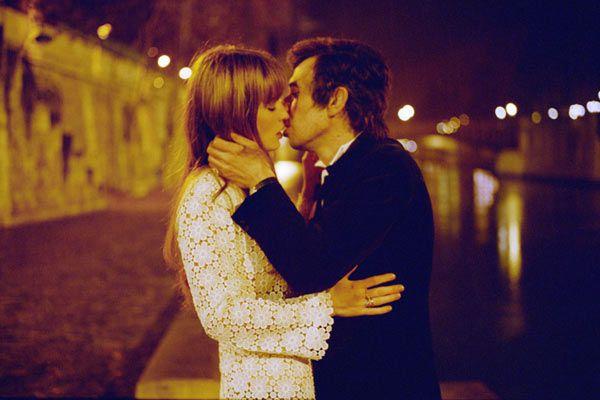
Comic book artist Sfar makes an arresting directorial debut with this biopic of a man perhaps best described (by a friend of a friend) as ‘France’s pervert laureate’. Sfar covers most of Gainsbourg’s life, from his childhood (when he was still Lucien Ginsburg) in Nazi occupied Paris, to his controversial career as a musician and his prolific womanising with some of the world’s greatest beauties; Juliette Greco, Brigitte Bardot and Jane Birkin among them. It’s a scattershot film, inevitable really when you are covering roughly 50 years, but it’s also an unusual and entertaining work.

Sfar follows the basic biopic form, most notably in the scene when Gainsbourg writes Je t’aime (moi non plus), which has the same slightly clunking feel as the moment in Ray when Jamie Foxx, as Ray Charles, writes Hit the road, Jack, but in both style and storytelling this is a rather unusual film. Sfar employs a clever device of giving Gainsbourg’s rebellious streak physical form (as a caricature known as Gainsbarre, which is, apparently, a very good pun in French). Doug Jones, surely the cinema’s foremost pantomime artist at the moment, gives Gainsbarre shape, and makes him by turns a funny, mischievous and sinister presence in the film. It’s a contrivance, and one that could have been heavy handed, but it is beautifully handled and the touch of surrealism it lends the film feels strangely appropriate to the unpredictable man at its centre.

The performances are top notch all round, but special notice has to go to Eric Elmosnino, he may look more like a cadaverous cross between Gainsbourg and Rowan Atkinson, but he embodies Gainsbourg completely, to the point that it seems less performance than possession. It’s not an easy part, Gainsbourg grows progressively more loathsome as the film goes on, but Elmosnino makes him entertaining, if not likable. There is also a tinge of sadness to watching the film, because the other stand out performance is given by British actress Lucy Gordon, who makes for an eerily convincing Jane Birkin. Gordon killed herself just weeks after finishing this role; a tragedy made even more senseless when you see how she leaps off the screen here.

I knew nothing about Serge Gainsbourg going into this film, and though I’m not sure I know much more now, I certainly had fun for two hours.


FAINTHEART
DIR: Vito Rocco


Charming, but ultimately far too safe and familiar to leave any lasting impression, this British rom-com about a battle re-enactor (played by the excellent Eddie Marsan) trying to win back his wife (Jessica Hynes) feels like exactly what it is; a film made by committee. The script, director and several cast members, were chosen through votes on Myspace, who also put up much of the funding (it appears to have been a commercial disaster, as the film never even received a cinema release in the UK).

Faintheart is a custom made feel good movie, almost embarrassingly unoriginal and lack anything constituting a surprise in even one of its plot developments, the fact that it isn’t awful is down largely to the excellent performances. Marsan is more dialled down than normal, since this film he’s made a name playing explosive characters, but he’s effective here as a normal guy just trying to be the best husband and father he can. Jessica Hynes is also effective; from her looks to her naturalistic acting there’s nothing Hollywood about her, and that works well for the film. There’s also a strong comic relief turn from Trainspotting’s Ewen Bremner.

The direction, sadly, is as rote and by the numbers as the screenplay, and the minor roles (the ones, one assumes, cast from Myspace audition tapes) are played by actors more suited to local theatre, but Faintheart gets by on a handful of performances better than the script deserves and a good deal of charm.


THE 36TH CHAMBER OF SHAOLIN
DIR: Liu Chia-liang


Directed by and starring Gordon Liu (now best known as Pai-Mei, and various other characters across the two volumes of Kill Bill), this Shaw Brothers effort is one of the generally acknowledged classics of martial arts cinema. Unfortunately I found it tremendously disappointing.

The story is by the numbers (young man on the run from the Manchus who killed his family takes refuge and trains in martial arts at Shaolin temple) and it takes forever to get going. Even the training sequences largely disappoint, thanks to the sheer dullness of the tasks (one seemingly endless sequence has Liu attempting to jump over a pool of water).

It is only in the last twenty minutes or so, after Liu leaves Shaolin and finally seeks his revenge that the film picks up. Here the choreography (though still very classical) is at least a little faster and punchier, but still, it’s all very rote. Groundbreaking in its day, yes, but looked at now 36th Chamber comes up very short.


TEMPLE GRANDIN
DIR: Mick Jackson


Every now and then, movies offer up a lovely little surprise, and this is certainly one of 2010’s. Claire Danes plays the real Dr. Temple Grandin, a profoundly autistic woman who has overcome many of her anxieties to become a great engineer and a leading expert in the field of the welfare of animals being raised for food. The story is simple enough biopic stuff, but Mick Jackson uses the visuals beautifully, managing to communicate in a way that is neither heavy handed nor unclear, the way that Grandin says she is able to think in pictures.

Jackson also draws an exceptional performance from Claire Danes. She’s always been actress who, to me, has exhibited more charm than skill, but here she completely melts away to leave behind only the character of Temple Grandin. I’ve spent a great deal of time with autistic people, and Danes’ is probably the most sensitive and most accurate portrayal of a profoundly autistic person that I can remember. She’s careful never to use Grandin’s disabilities for comedy, never to mock her, but at the same time she makes no play for sympathy. She presents Grandin as a complete and complex young woman. I’d be tipping her for an Oscar, but unfortunately the film debuted on HBO, and so is ineligible.

Temple Grandin is an excellent film, with fine performances all round from a cast that also includes Julia Ormond, David Stratairn and Catherine O’Hara (terrific in a rare straight role), but it is, at the end of the day, Claire Danes' film, and she carries brilliantly, giving a performance I would never have suspected she had in her.


ZOMBIE GIRL: THE MOVIE
DIR: Justin Johnson / Aaron Marshall / Erik Mauck


Zombie Girl: The Movie is a highly entertaining documentary about 12 year old Emily Hagins, as she makes her feature directorial debut with a self-penned zombie movie (she wrote the script aged 10) called Pathogen. The doc is never fawning (it shows Hagins fucking up on many occasions, and even the odd moment of petulance towards her near saintly mother) but it doesn't mock either, choosing to highlight the sheer excitement that Hagins has to be making her own film. She's an engaging character too, smart when she stops to think, and witty too. I've ordered Pathogen on DVD on the strength of this film (watch for a review soon), but in its own right Zombie Girl is definitely a film to show the young aspiring filmmaker in your life.