Books every movie lover should own.
Everything I ever needed to know, I learned at the movies. A nice idea, but sadly not true. Learning about movies doesn’t just mean watching them, it sometimes also means reading, and there are many, many great books about the cinema out there, ranging from the scholarly to the scandalous. I could write a much longer list of recommended reads, butt I’ve decided to boil it down to five that I’ve found both entertaining and (sometimes) instructive. I’ve tried to keep to slightly lesser known titles (hence, for example, no William Goldman), and the list is alphabetical by authors name.
Final Cut
By Steven Bach
Heaven’s Gate effectively marked the end of the New Hollywood, that auteur driven period (chronicled in Peter Biskind’s Easy Riders, Raging Bulls) in which studios seemed to hand control over to edgy young talents like Martin Scorsese, Steven Spielberg and Francis Ford Coppola, and allow them to make groundbreaking, intelligent movies that were then marketed to mass audiences. Bach’s insiders account (he was an executive at United Artists, and heavily involved in Heaven’s Gate) of the disastrous hands off approach of the studios, and how the combination of that with Michael Cimino’s rampaging ego meant that the budget for his magnum opus went from a predicted $7million when the script was delivered to nearly $50million by the time the marketing was paid for effectively killed both a production model and, in its contemporary incarnation, United Artists, is both scary and laugh out loud funny.
What really impresses is the absolute wealth of detail that Bach is able to go into one every subject from the budget, to attempts to control Cimino, to the long debates over the casting of Isabelle Huppert, to the disastrous screening of Cimino’s first assembly, which ran five and a half hours and, he suggested, was ‘about fifteen minutes too long’. The personalities of all involved jump off the page, and provide perhaps the most lucid insight I’ve ever read into the internal politics of a Hollywood studio. Most of all, it makes Heaven’s Gate a fascinating proposition (though I still haven’t been able to sit through the film). Like the excellent documentary Overnight, Final Cut is a sobering insight into how NOT to behave as a filmmaker.
Projections 10
Edited by Mike Figgis
The Projections series, while often interesting in fits and starts, can be a bit dry for my tastes, but this entry, largely a series of interviews conducted by the filmmaker Mike Figgis, presents a fascinating and wide ranging picture of Hollywood in the late 1990s. Figgis talks to actors and directors, of course, but also to critic Kenneth Turan, to agents, studio execs and actors managers. The interviews aren’t very formal, instead having the feel of a free flowing conversation (undoubtedly helped by the fact that Figgis knows several of his interviewees well, having worked with them).
There’s great insight into the way the business can be rather cruel, especially from the frank contributions of actresses on the lower rung of the stardom ladder, like Ming Na-wen and Elisabeth Shue. With Boogie Nights only just completed, a young Paul Thomas Anderson is full of energy and passion for movies (and rants about the fact that his movies are often released with colour wrongly calibrated). Sylvester Stallone comes across as genuinely cerebral, Jodie Foster as the most intimidatingly intelligent person you could ever meet, and Robert Downey Jr, between brushes with the law, as troubled but fascinating. Also intriguing are the answers to Figgis’ repeated questions, asking for books, pieces of music, movies, actors and actresses that have made an impression on his interviewees. As a snapshot of varied Hollywood experiences, they really don’t get better than this.
With Nails
By Richard E Grant
Richard E. Grant’s film diaries are frequently much more entertaining than the films they’re about. He chronicles, in excitable, often CAPITALISED prose the fulfilment of his long held dream of being a Hollywood actor (if not really a star) and getting to work with the likes of Altman, Coppola and Scorsese in quick succession.
With Nails is a fast and very funny read, sharp as its title and packed to the gills with hilarious anecdotes from both on and off set. Meetings with Sharon Stone, Madonna and Demi Moore (“You sound like a rusty carburettor”, says Grant) are hilarious, as are the tales of the nightmarish making of Hudson Hawk, rehearsals for Warlock (on whip practice “Feel as though my arm has been hooked up to an artificial wanking machine”), and Coppola’s Dracula.
This is a look at Hollywood from a wide-eyed, admiring outsider turned wide-eyed, admiring insider (on his way to a premiere, gazing out the window, Grant’s companion asks what he’s doing and he replies “Gawping”). It’s a great book to dip in and out of, because almost every page features some hugely funny incident co-starring someone exceedingly famous.
See No Evil
By David Kerekes and David Slater
Kerekes and Slater’s exhaustive study of the ‘video nasties’ is outstanding on the films themselves (even if its comments on availability are now mostly outdated), but where it really excels is as a social history of the relationship between audiences, the press and controversial films. Each of the 70 odd films on the official nasties list is given a full appraisal, with comments about each one’s quality, history with the censors, and various releases and there is excellent coverage, in the first couple of chapters, of how cheap horror films came to dominate the early days of video in the UK.
Even better is a history of the way that the media engaged with (or, rather, refused to engage with) these films and the moral panics surrounding films like Child’s Play 3 and The Evil Dead and cases like that of ‘The Fox’, Michael Ryan, and the Columbine killers. It’s a riveting and persuasively argued read, exposing the tabloids for the smear printing liars they are. See No Evil built on my interest in censorship, and was thee thing that really turned me on to horror films in a big way. I still refer to it regularly when writing about censorship and as well as being a first class work of research on censorship it is a thoroughly entertaining read. An essential if you’ve even a passing interest in horror films or censorship.
A Year at the Movies
By Kevin Murphy
Kevin Murphy was part of the writing staff and cast of Mystery Science Theater 3000, and wrote this book, in which he travels the world, seeing at least one film at a cinema of some kind every single day for a year (2001) at a time when the show had finished and he thought, having seen such a lot of crap, that he might be falling out of love with movies. A Year at the Movies is a great book because it unashamedly celebrates and loves cinema, from the thrill of taking a kid to his first film (Monsters Inc, a fine start) to the odd experience of seeing a short film in a cinema in a hotel made of ice.
Given the timing of Murphy’s trip, 9/11 also intrudes, and, happily, coincides with one of Murphy’s favourite films of the year, one that really reaffirms his faith in cinema. He’s a genial host too, funny and enthusiastic, making points about what he thinks cinema is and should be, but without seeming to lecture (much, anyway). It’s a warm, involving book that reminds me why I love (and sometimes hate) movies, and makes me want to embark on a similar trip.
Showing posts with label Five.... Show all posts
Showing posts with label Five.... Show all posts
Sunday, March 21, 2010

Friday, March 5, 2010
Five... Great Opening Credit Sequences
The art of the opening credit sequence is dying, which is a shame, because when it’s exploited to the full a credit sequence can be an extremely useful tool to draw us into the mood and the world of a film. Used badly (Woody Allen, I’m looking at you) it’s just a boring list of names, but this post is about…
Five Great Opening Credit Sequences
There is a trend at the moment for putting full title sequences at the end of films. I’ve elected only to choose films whose credits come at the start of the film (within reason, there’s nothing wrong, for example, with having a short scene or sequence before the credits). I’ve also imposed a 1 film per director rule; otherwise this post would just be me bowing down to David Fincher. The films are listed alphabetically by title.
Click the titles to watch the sequences.
ALIEN

Controversially, I’ve got little love for Ridley Scott’s revered monster movie (every time I watch it I find myself wanting to bellow “when is something going to happen?!” at the screen. That said, this may be the single greatest title sequence in cinema. It’s astonishingly simple and stark, just building that indelible one word title, line by line; it’s also an incredibly unnerving sequence. For me Scott fails to deliver on the sheer menace of this sequence, I imagine you’ll disagree there, but surely we can agree that this title sequence is a beautiful, self-contained, work of genius.
ANATOMY OF A MURDER

Because making a list of great title sequences without including any of Saul Bass’ work would be like making a list of great bands that didn’t have The Beatles on it, or a list of great foods without including pizza. This sequence for the excellent 1959 courtroom drama is simplicity itself, making use of one striking graphic (a stylised body cut into sections) to give the film a visual identity before even the first frame of the drama has started.
DAWN OF THE DEAD [2004]

I’m probably in a small minority thinking that Zach Snyder’s remake surpasses the George Romero original comfortably, but again, I think we can all agree that the title sequence fro Dawn of the Dead, set to Johnny Cash’s eerie ‘The Man Comes Around’ sets it up brilliantly. The scenes of devastation are a clever mix of genuine news footage (incorporating a little of Romero’s social commentary), brief flashes of zombie action, and fan pleasing cameos (Ken Foree). In four minutes this sequences sells a world gone straight to hell.
SE7EN

I remember seeing Se7en for the first time. I was about 15, and home sick from school, on my request my Mother had rented the tape, which had just come out, to occupy me while she was at work. I’d been drawn in by the brief ‘teaser’ sequence, but when this set of titles came on I was completely held by the film for the next two hours. This incredibly disturbing, almost viscerally dirty, sequence was the one that really made me sit up and take notice of title sequences, rather than fast forwarding them to get to the movie (I was SO young). It also reinvigorated title design. Without Se7en the films either side of it on this list probably wouldn’t have such great titles.
SPIDER-MAN 2

All of the Spider-Man films have fine titles, but this sequence, painted by Marvel artist Alex Ross, is the standout of the franchise to date. Rather than go back on the first film’s story through clumsy voiceover or flashbacks, Sam Raimi and Ross remind us of key events elegantly, through beautifully lifelike paintings of the first film’s most important scenes. It’s a great way to draw us back into the world of Spider-Man, and a smart way to put us back in the place we were at at the end of the first film without boring us with things we’ve seen before; a clever and graceful sequence.
Five Great Opening Credit Sequences
There is a trend at the moment for putting full title sequences at the end of films. I’ve elected only to choose films whose credits come at the start of the film (within reason, there’s nothing wrong, for example, with having a short scene or sequence before the credits). I’ve also imposed a 1 film per director rule; otherwise this post would just be me bowing down to David Fincher. The films are listed alphabetically by title.
Click the titles to watch the sequences.
ALIEN

Controversially, I’ve got little love for Ridley Scott’s revered monster movie (every time I watch it I find myself wanting to bellow “when is something going to happen?!” at the screen. That said, this may be the single greatest title sequence in cinema. It’s astonishingly simple and stark, just building that indelible one word title, line by line; it’s also an incredibly unnerving sequence. For me Scott fails to deliver on the sheer menace of this sequence, I imagine you’ll disagree there, but surely we can agree that this title sequence is a beautiful, self-contained, work of genius.
ANATOMY OF A MURDER
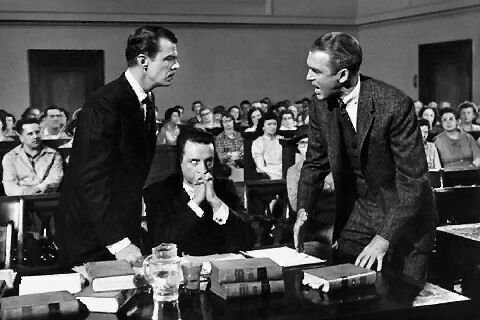
Because making a list of great title sequences without including any of Saul Bass’ work would be like making a list of great bands that didn’t have The Beatles on it, or a list of great foods without including pizza. This sequence for the excellent 1959 courtroom drama is simplicity itself, making use of one striking graphic (a stylised body cut into sections) to give the film a visual identity before even the first frame of the drama has started.
DAWN OF THE DEAD [2004]

I’m probably in a small minority thinking that Zach Snyder’s remake surpasses the George Romero original comfortably, but again, I think we can all agree that the title sequence fro Dawn of the Dead, set to Johnny Cash’s eerie ‘The Man Comes Around’ sets it up brilliantly. The scenes of devastation are a clever mix of genuine news footage (incorporating a little of Romero’s social commentary), brief flashes of zombie action, and fan pleasing cameos (Ken Foree). In four minutes this sequences sells a world gone straight to hell.
SE7EN
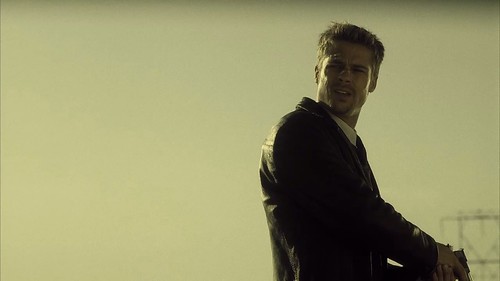
I remember seeing Se7en for the first time. I was about 15, and home sick from school, on my request my Mother had rented the tape, which had just come out, to occupy me while she was at work. I’d been drawn in by the brief ‘teaser’ sequence, but when this set of titles came on I was completely held by the film for the next two hours. This incredibly disturbing, almost viscerally dirty, sequence was the one that really made me sit up and take notice of title sequences, rather than fast forwarding them to get to the movie (I was SO young). It also reinvigorated title design. Without Se7en the films either side of it on this list probably wouldn’t have such great titles.
SPIDER-MAN 2

All of the Spider-Man films have fine titles, but this sequence, painted by Marvel artist Alex Ross, is the standout of the franchise to date. Rather than go back on the first film’s story through clumsy voiceover or flashbacks, Sam Raimi and Ross remind us of key events elegantly, through beautifully lifelike paintings of the first film’s most important scenes. It’s a great way to draw us back into the world of Spider-Man, and a smart way to put us back in the place we were at at the end of the first film without boring us with things we’ve seen before; a clever and graceful sequence.
Subscribe to:
Posts (Atom)