Friday, October 9, 2009

Mini-Reviews: Playing catch up

AWAY WE GO (15)
DIR: Sam Mendes


Mendes’ latest seems to be the flipside of January’s Revolutionary Road. While that film featured searing performances, and exposed a failing marriage in a way so raw that the whole film felt like an open wound, Away We Go is an (ostensibly) amiable little film about a happy couple taking a roadtrip. That’s the problem, the central couple don’t change one iota during the story, and that makes them rather dull company.
In an extremely episodic film they travel round America, dropping in on various friends, all of whom turn out to be absolutely awful people. This is supposed to be funny, but ends up simply being annoying, as the performances are so shrill (especially that by the usually wonderful Alison Janney) and the characters so intensely horrible, that you spend the whole film actively wanting to get away from everyone in it.
Away We Go is a smug, annoying film, with smug, annoying characters and performances and a smug, annoying soundtrack to match. Run away.


CLOUDY WITH A CHANCE OF MEATBALLS [2D/3D] (U)
DIR: Phil Lord / Chris Miller


Even before the film had really started, I was a little bit in love with Cloudy With a Chance of Meatballs, because its opening credits read “A film by a lot of people”. That spirit - witty, slightly anarchic, but also very sweet - epitomises this excellent film. Based on a children’s book, which I assume is better known in the US, Cloudy is about Flint Lockwood, a backyard inventor whose creations never quite work (we see several in a very funny early montage). Until, that is, he creates a machine that turns water into food, and is able to make meals rain down on his tiny hometown three times a day.

Cloudy is a very silly film, but in the Monty Python, rather than say the Michael Bay, mode of silly. There is a joyous abandon to this film. The jokes come thick and fast, and most stick because they aren’t predictable. This slightly twisted humour permeates every frame, with side jokes all over the place and a beautifully developed sense of the absurd. Even the running gags (such as the monkey thought translator fitted to Flint’s pet monkey) work because the timing is spot on and there’s enough variety and what is done with those running gags to keep them funny.
Strong vocal performances by Bill Hader as Flint and the irrepressible Anna Faris as his weather girl love interest make the romantic subplot play, while the brilliant work of Neil Patrick Harris (as Steve the Monkey) and Mr. T (as the local policeman) keeps the laughs coming. The 3D process adds nothing, but however you see it, Cloudy With a Chance of Meatballs is one of 2009’s finest films.


THE CAKE EATERS
DIR: Mary Stuart Masterson


Actress Mary Stuart Masterson’s directorial debut looks nice enough, and is admirably seriously intentioned; sadly she’s undone by a screenplay and performances that belong to an especially poor disease of the week TV Movie. This probably shouldn’t be a big surprise, what with Kristen ‘I only have two expressions’ Stewart playing the lead role. Stewart does seem to be working hard here, her character has a wasting disease of the muscles, and her physical work isn’t bad, but Stewart’s face and voice remain resolutely inexpressive, even when she should be projecting deep, raw, emotion.
The rest of the cast either under (Aaron Stanford) or over (Bruce Dern) act their roles, resulting in the feeling that every actor is appearing in their own little movie. I got the feeling that either Masterson wasn’t able to control her cast or that she was more interested in her visuals. The Cake Eaters is dull, poorly acted, emotional pornography.


HOUNDDOG
DIR: Deborah Kampmeir


Infamous from Sundance 2007 as ‘the Dakota Fanning rape movie’, it’s probably unsurprising that Hounddog has had trouble securing a wide release, not only because it is ‘the Dakota Fanning rape movie’, but also because it is completely awful. You have to give Dakota Fanning her dues here, she’s outstanding in a very tough role, but the film around her starts out silly, and then lurches further towards unspeakably stupid with every passing frame.
The big problem is director Deborah Kampmeir. She clearly has a thing for snakes, and is using them here as symbolism. By which I mean that every time something bad happens, there’s a snake, and when things get really bad, there are snakes EVERYWHERE, including crawling all over Fanning. She’s also clearly obsessed with the titular song, which appears over and over again, frequently sung by Fanning. If you only learn two things from Hounddog they are: Deborah Kampmeier never met an obvious metaphor she didn’t like and Dakota Fanning should never, ever, under any circumstances, sing.


GHOST IN THE SHELL 2.0 (15)
Dir: Mamoru Oshii


Ghost in the Shell 2.0 is an odd undertaking. Not quite a remake, but also more than a simple remastering. Ghost in the Shell remains an intelligent and exciting sci-fi movie, and actually it seems to be more and more relevant as time goes on, but this revised version isn’t entirely a success. The new animation is breathtaking, but it sits a little uneasily next to the original cel animation, which still makes up the bulk of the film. In several sequences the film cuts between the new CG renders and the original cel animation, and the difference is jarring. I also wonder what the point of re-recording the dialogue (at least for the Japanese track) was. The major difference is that the antagonist now has a female voice to go with its female body, but for me that actually removed what was an effective incongruity in the original version. Ghost in the Shell 2.0 is, then, more an intriguing companion piece to the original than it is a replacement for it.

Wednesday, October 7, 2009

Review Post 50: Thirst

박쥐
[THIRST]
DIR: Park Chan-wook
CAST: Song Kang-ho, Kim Ok-bin,
Shin Ha-kyun, Kim Hae-sook


Park Chan-wook’s latest has accidentally caught the zeitgeist, but he’s been planning this vampire movie for a decade.

I’ve wanted to see Thirst ever since I heard about the idea, just after Oldboy was released. Back then the only details available were that it would be a vampire film starring Park’s close friend and frequent collaborator Song Kang-ho (Sympathy for Mr Vengeance, Memories of Murder) and that it would be called Evil Live. The title may have changed, but in those ten years the central idea of a Catholic priest who struggles to retain his faith when he becomes a vampire has remained. While retaining this basic central idea Park has wedded it to an adaptation of Zola’s Therese Raquin. I’ve not read the novel, but I understand that several of the characters (notably the older woman played by Kim Hae-sook) have direct parallels and that some key events, particularly a sequence in a fishing boat, are lifted from it. It’s to Park’s and co-screenwriter Jeong Seo-kyeong’s credit that the vampire story and the adaptation meld so beautifully.

Song Kang-ho is a wonderfully versatile actor, a favourite of Park and of Bong Joon-ho. He’s able to be the everyman, but also to convincingly go out on a limb. As Sang-hyun, Song does some of his best work to date. His struggle with his nature, his desire to embrace his vampirism and yet retain his Catholicism, to attempt not to sin, seems deeply felt and is beautifully played. I wonder if there has been some subtle effects work done on Song’s appearance, as the 42-year-old actor seems more youthful than he lately has on screen. Certainly he seems to have done some exercise for the part, losing much of the paunch he displayed in The Good, The Bad and the Weird. This really helps to sell Sang-hyun’s newfound vampirism. He’s a credible physical threat, without looking like an action hero. But it’s Song’s performance, rather than his look, that really carries Thirst. He gets the tone of the part absolutely right, playing absolutely straight even though the film is a very black comedy, and thus allowing us to get sucked into the character of Sang-hyun, and through him the story.

Blood isn’t the only thing that tempts Sang-hyun after he becomes a vampire; there is also sex, in the form of Kim Ok-bin as Tae-ju. Tae-ju is married to an old friend of Sang-hyun’s (eccentricly played by Shin Ha-kyun of Mr Vengeance and Save the Green Planet), but she begins an affair with the priest and soon persuades him to turn her into a vampire. Kim Ok-bin steals the whole movie. Tae-ju is a wonderful character; outwardly sweet and quiet, but underneath that she’s a scheming, slightly psychotic (witness the scene where she repeatedly pretends to stab her husband as he sleeps), temptress, and that’s before she becomes a vampire. When that happens Park lets her run riot, she lets herself off the leash completely, giving a wonderfully funny and creepy performance as a woman revelling in her vampirism. Sang-hyun has always taken his blood from a friend lying in a coma, and has been careful not to kill, but Tae-ju kills with giddy abandon, saying that it’s more fun, and besides, it tastes better.

Kim Ok-bin’s performance helps make the last third of Thirst its funniest passage, but the entire film has a rich vein of comedy running through it. This is one of Park’s trademarks; he freely mixes deadly serious ideas (here murder, relationships and the nature of faith) with absurd moments. The funniest thing in Thirst is Kim Hae-sook’s performance in the last part of the film. After Tae-ju becomes a vampire her mother is paralysed, but she still has all her wits about her. In one riotous scene Tae-ju’s mother tries to tell the friends that Tae-ju and Sang-hyun are playing Mahjong with that her daughter and the priest are killers, using only her one mobile finger and her eyes.

Oldboy may have announced Park Chan-wook on the international stage, but his work both before and since that film confirms his status as one of the major talents in world cinema. To say that Thirst doesn’t represent his best work is true, but hardly an indictment. The only moment at which Park’s control of the film seems to slip is late in the second act and early in the third, when it runs a little off the rails and a couple of plot points go under explained. However, with the help of his excellent cast, he recovers and takes the film out with half an hour of brilliance. All Park’s films are beautiful, and this is no exception. The colours are extraordinary, with Tae-ju’s blue dress (an homage to one of Park’s inspirations; Andrzej Zulawski’s Possession) and the impossibly vivid red of blood on the brilliant white floor of Sang-hyun and Tae-ju’s lair standing out in particular. CGI is sparingly used, and the effects are always used to a purpose and extremely high quality. It’s hard to describe why Park Chan-wook’s films are such a pleasure to look at, because there is just so much to talk about. Every one of his frames is suffused with diverting and beautiful detail, so much so that you could probably watch this film without its soundtrack and still get a great deal out of it - not something that can be said about most movies.

Thirst is a rich, tasty, treat for horror fans. Park doesn’t stint on the sex and violence that you expect in the genre, but he delivers it with intelligence and wit, and in conjunction with a literate, thoughtful, script and performances of great depth and quality. Make no mistake, even though this film isn’t quite up to the amazing standard set by Oldboy and Lady Vengeance it still offers further proof that Park Chan-wook is one of the great filmmakers of our time, and I suspect it will only become more rewarding with repeat viewing.

Kim Ok-bin

Kim Ok-bin is one of the best things about Park Chan-wook's Thirst, both because she's wonderful in her role as Tae-ju and because she's, as you can see, stunningly beautiful.
Free image hosting powered by PostImage.org Free image hosting powered by PostImage.org Free image hosting powered by PostImage.org

Tuesday, October 6, 2009

Review Post 49: The Invention of Lying

THE INVENTION OF LYING
DIR: Ricky Gervais / Matthew Robinson
CAST: Ricky Gervais, Jennifer Garner,
Louis CK, Rob Lowe


Previously, whenever I’ve seen Ricky Gervais, I’ve almost been overcome with the desire to punch him in his pudgy, perma-smug, face. In this respect The Invention of Lying represents some progress.

In his second Hollywood lead Gervais isn’t as irritating as usual, and even makes for a passable everyman hero (though he’s no Jimmy Stewart). The film has a very simple conceit: nobody can lie, until one day Gervais - as Mark Bellison, though, let’s be fair, he’s playing Ricky Gervais - finds that he is suddenly able to say things that aren’t true. The inability to utter an untruth is complemented by the fact that everyone in this parallel world seems to be unable to edit what they say, and so, for example, when Mark turns up to pick up his blind date (Garner) she greets him with a cheery “I was just masturbating”. That’s the joke.

And that’s the problem at the heart of The Invention of Lying; that is THE joke. Every single joke in the film grows out of this conceit. It’s not a bad joke by any means, but it wears very thin long before the film’s 100 minute runtime is even close to running out. When you’ve only got one joke the success is all in the telling, and there are some people in The Invention of Lying who tell the joke very well indeed. Tina Fey and Jeffrey Tambor score in small roles as Gervais’ secretary and his boss, but it is Rob Lowe who threatens to steal the film. I’ve liked Lowe as a comic actor ever since Wayne’s World, and here he essentially plays a 100% honest version of that character - loathsome, slimy and often very funny.

The other real laughs in the movie tend to come from the margins, especially with the astute parody adverts; “Coke: it’s very famous.” and “Pepsi: When they don’t have Coke.” At about the midway point of the film Mark’s mother dies, and to comfort her in her last moments, Mark invents Heaven. This should have been the point at which The Invention of Lying really took off, it could have become a truly smart and biting satire of the way that religion lies to and exploits people. Sadly it lacks the courage, and instead sticks to its one established joke.

The romantic comedy aspect of the film doesn’t really work, mainly because it is undermined by the fact that there is little chemistry because Garner’s character constantly restates that she’s not attracted to Gervais. This also undermines the idea that he’d be attracted to her. She’s very pretty, granted, but when Mark says that she’s the most wonderful person he’s ever known you’ll scoff at the idea, because she’s seldom been anything but rude to him.

There are lots of little problems with The Invention of Lying - the boring sitcomish look, the logical lapses (why, and how, for example is Edward Norton playing a corrupt cop, given that nobody in the world can lie?), the lack of appetite to say or do anything really smart or challenging, the self conscious celeb cameos. The thing that really sinks the film, though, is that its one joke just isn’t all that funny.

The Prince Charles Cinema, yesterday

Sunday, October 4, 2009

The Long Halloween: Movie of the Week Double Bill

Irritatingly I still haven’t seen last week’s Movie of the Week, because when I came to watch it yesterday it had been deleted from youtube. As Blackadder put it: I think the phrase rhymes with ‘clucking bell’.

Anyway, it’s a new week, and that means another movie of the week. It’s also October, and that means Halloween. Yesterday it was four weeks until all hallows eve, and I decided that I would spend those four weeks watching frankly ludicrous amounts of horror films. Each film will have at least a mini-review, but there will also be several special features including The Complete Nightmare on Elm Street, the return of Why Haven’t You Seen… and three special Movie of the Week double features. So, enjoy The Long Halloween.

The Mummy (1932)
Dir: Karl Freund
For my money this is the best of Universal’s 1930’s horror cycle. The Mummy boasts one of Boris Karloff’s (billed on the poster as Karloff the Uncanny) finest performances. His turn as Ardeth Bey, the reincarnated priest Imhotep, is masterfully subtle and economical one, played as much in body language and in those extraordinary eyes as it is the hypnotic, soothing, but effortlessly menacing voice. Karl Freund came from the tradition of German expressionism, and before The Mummy plied his trade as a cinematographer. This pays off here in a genuinely gorgeous looking film. However, Freund is only partially responsible for the image that sticks most in the mind; that of Karloff’s make up. Jack Pierce’s full Mummy make up has never been bettered, but his true masterpiece is the make up for Ardeth Bey, which subtly makes Karloff look like he might be crumbling. There are some overblown performances, but get past them and The Mummy remains chilling and brilliant.

Witchfinder General (1968)
Dir: Michael Reeves

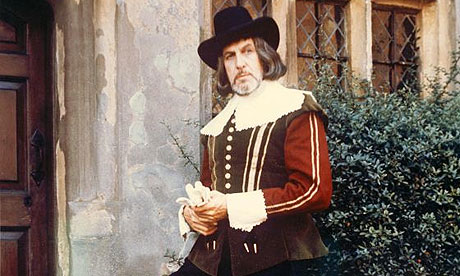
Witchfinder General was only the second feature by 25-year-old wunderkind Michael Reeves; tragically it was also his last. Reeves died of a drug overdose shortly after finishing this film, but over 40 years later Witchfinder General stands as a record of a talent that promised much. Vincent Price gives a deliciously evil performance as the titular Matthew Hopkins, a real historical figure who, from 1645 to 1647, travelled around eastern England ‘discovering’ witches for a fee. He tested for witchcraft in many torturous ways, often cutting them or holding them underwater. Those who didn’t die during the tests were, if Hopkins thought them guilty, were hanged or burnt at the stake. The film was heavily censored on its initial release, but the version presented here is Reeves’ directors cut.


These links will take you to the first part of each film. The Mummy will autoplay. Enjoy.
The Mummy
Witchfinder General

Friday, October 2, 2009

Review Post 48: Creation / Surrogates

CREATION
DIR: Jon Amiel
CAST: Paul Bettany, Jennifer Connelly


Even before it has been released, Creation has caused controversy in the US. I doubt it would have if anyone had seen it, because this movie is so stunningly dull that it is near impossible to imagine anyone getting annoyed about it.

The latest by resolutely adequate director Jon Amiel (Sommersby, Copycat) Creation purports to be the story of the writing of The Origin of Species. That, for the most part, isn’t really true. Rather the film is about Darwin’s stalling and the terrible sadness over the death of his eldest daughter, which appears to have, for a long time, kept him from completing the book. It is a wise choice to have a narrow focus on a life as expansive as Darwin’s, but you can’t help but feel that, in this case, the focus has been put in the wrong place. I don’t know enough about Darwin to comment on the veracity of the story told here, but the telling is overblown, and hammers the emotional buttons with such desperation that I came to suspect that massive liberties were being taken with the truth.

As a movie, Creation feels curiously unevolved. It often plays as if it were from the 1930’s. The performances are especially old fashioned. The entire cast acts not as if they were playing to a camera but to the back of a huge theatre. Every emotion is writ large; every line (over)enunciated in ludicrously clipped upper class English accents (on the pure technical point here, credit to Jennifer Connelly, whose accent is excellent). It’s a performance style that is unfamiliar in modern cinema, and disconcerting because of that. More than that though, the acting is combined with Amiel’s grasping direction, which often tries to pummel emotion out of the audience and with a script at once thuddingly obvious in its aspirations to contemporary resonance and desperate to manipulate tears out of us. It all adds up to an intensely off-putting experience.

Paul Bettany and Jennifer Connelly are both capable actors, and if they stopped playing to the rafters they would likely be fine in the roles of Charles and Emma Darwin. The fact that Creation doesn’t work at a performance level is unlikely to be their fault as much as it is that of Amiel’s ham-fisted direction. The supporting cast do better. Jeremy Northam and Toby Jones pop up in far too few scenes each as, respectively, Darwin’s local priest and a fellow scientist. The real star turn is that of young Martha West, who brings Annie Darwin to sparkling life, even when she’s appearing as a ghost.

At several points during the film Charles Darwin tells his children stories of the trips he made researching The Origin of Species. Here the film comes to life, especially in one scene that shows Bettany interacting with an Orangutan. These brief glimpses had me far more interested in the story of the research for this seminal book than I was in that of its writing. The impulse to find some insight into Darwin the man is admirable, but this dull film tells us little about him, and fails to make him interesting or sympathetic enough to even interest us in learning more. At the end of the day Creation feels like a two hour digression from an interesting discussion.


SURROGATES
DIR: Jonathan Mostow
CAST: Bruce Willis, Radha Mitchell,
Rosamund Pike, James Cromwell


It’s an appealing idea, the ability to be someone else. Just think; if I had a surrogate he could have seen this crappy movie for me. Truly then the world would be a better place.

Surrogates seems to take place in an alternate present, in which humans no longer leave their houses. Instead they have ‘surrogates’ robotic bodies they can remotely control, allowing them risk free experiences of all kinds, as well as the ability to appear not as they are but as they would like to be. A murder - the first in many years - that kills both a surrogate and his operator leads FBI agents Grier and Peters (Wills and Mitchell) to realise that there is a new type of weapon on the streets, and that they must find it before the militant anti-surrogate humans, led by The Prophet (Ving Rhames) are able to use it on a large scale.

That’s just the setup, and what we learn during the first ten minutes of the movie. During that time I had the entire plot worked out, almost beat for beat. That’s the biggest problem with Surrogates, it is assembled from the spare parts of a hundred better sci-fi movies, and that means that it is so predictable that you could almost set your watch by the manner in which the plot elements are ticked off. It also means that the film is unspeakably boring.

All sci-fi movies are really about the present in which they are made, and Surrogates is no exception. Satire and social comment are to be welcomed in sci-fi, except when they are done so ham-fistedly as they are here. The Dreads and their leader The Prophet are clear analogues for al-Qeada and Osama Bin Laden, so much so that a tape from The Prophet apes, down to the last detail, the Bin Laden tapes that periodically pop up on the news. It’s obvious, and poorly used, but that’s not the problem. The problem is that by casting the Dreads in this light the film appears to say that, at the end of the day, terrorism is good, and works. Perhaps the wrong message. The satire of our relationship with technology, and how it can cut us off from the real world, is also far too broad, and lands with a thud.

I wasn’t the only person who was bored during this film. Bruce Willis was right there with me. I like Willis, he’s charismatic and a far better actor then he’s often given credit for, but here he seems half asleep much of the time. He mumbles his way through scenes, looking like a man with a large alimony bill to pay, betraying none of his usual magnetism and bringing no colour to his character. I saw Surrogates less than 24 hours ago, and I couldn’t give you one distinguishing quality about Tom Grier. He’s a nothing, and that’s exactly what Willis brings to the table.

The other performances range from attractive set decoration from Radha Mitchell and the quite jaw droppingly stunning Rosamund Pike to the wild overplaying of James Cromwell (again, usually so good) and Ving Rhames. It is perhaps an inherent danger of the subject of the film that the characters feel bland and emotionless, but it makes for a seriously unsatisfying viewing experience all the same.

The thing that really should have worked here, especially with Jonathan Mostow on board, was the action. On the plus side it is pleasingly free of the fast cut shaky-cam that has ruined so many action movies of late, but Surrogates' action is seriously lacking in imagination. The stand out action scene has Willis (as Grier’s surrogate) free running through Dread territory and is a direct, though CG assisted, lift from the far, far better scene at the beginning of Casino Royale. The rest of the action is brief, and extremely low impact.

At a technical level Surrogates isn’t bad. The digital effects are decent and it is competently shot, but I really expected more from this. It has an interesting idea, a strong cast and a good action director; it’s a shame that it does nothing with those assets.